
Faucet and Minor Plumbing Repairs
HammerNest helps Freeport-area homeowners review faucet, fixture, sink-edge, visible connection, cabinet-surface, and minor plumbing-adjacent repair requests within clear handyman boundaries.
Fast response. Quality work. Fair pricing.
Minor plumbing-adjacent help
Routine faucet and minor plumbing-adjacent help in Freeport, IL
HammerNest reviews small, connection-ready fixture and plumbing-adjacent requests for homes and rental properties around Freeport, IL. This page is broader than one dripping faucet and focuses on visible, localized items that can be documented clearly.
Faucets, fixture hardware, mounting surfaces, visible connections, cabinet condition, caulk lines, and surrounding materials should be reviewed together. That keeps a loose faucet body, worn handle, sprayer concern, sink-edge caulk issue, toilet-seat hardware, or small bathroom accessory from being treated in isolation.
Faucets and handles
Loose faucet bodies, worn handles, stiff controls, and visible fixture hardware should be shown with the full sink or vanity area.
Sprayers and accessories
Pull-down sprayers, side sprayers, bathroom accessories, and small mounted items should be photographed with their mounting points.
Sink-edge and caulk concerns
Failed caulk around sinks, backsplashes, counters, and fixture edges should be shown with surrounding material visible.
Visible under-sink context
Accessible shutoffs, supply lines, drain area, faucet mounting points, and cabinet surfaces can help define the visible scope.
Grouped small fixture items
Kitchen, bath, laundry, utility sink, toilet-seat, and fixture-hardware items can be grouped when each one is documented clearly.
Minor plumbing-adjacent help does not include concealed plumbing, valve replacement, drain changes, gas work, or licensed plumbing claims.
Share wide fixture photos, close-ups, safe cabinet views, model details, supplied parts, and any broader plumbing concern.
Project intake checklist
What to send with a minor plumbing repair request
Clear photos and basic fixture details help show what is loose, leaking, damaged, or difficult to use without turning the request into plumbing troubleshooting. Focus on what is visible and safe to document.
For each fixture or surface, include a wide view, close-ups, normal-use video when helpful, and safe cabinet photos. Product information and owner-supplied parts help clarify whether the request is ready for review.
Wide area photo
Show the complete sink, vanity, toilet, laundry fixture, utility area, cabinet, counter, backsplash, and nearby access.
Symptom close-ups
Capture where water, looseness, staining, failed caulk, movement, or damage appears during normal use.
Short normal-use video
A brief video can help show a drip, handle issue, sprayer concern, rocking faucet, or loose fixture without taking anything apart.
Safe under-sink views
Photograph visible shutoffs, supply lines, drain components, faucet mounting points, and dry cabinet surfaces without disconnecting anything.
Parts and access notes
Include brand, model, product link, dimensions, owner-supplied parts, cabinet layout, disposals, filters, shelves, and stored items.
Do not disconnect lines, remove plumbing components, open walls, or force questionable valves for photos.
Include wide views, close-ups, normal-use video, visible connection photos, part details, and cabinet access notes.
How it works
How the minor repair request works.
A simple flow from fixture photos to practical follow-up.
- Send repair detailsShare photos, location, urgency, and the best way to reach you.
- Upload photos if helpfulWide and close-up photos make the first review clearer.
- Choose call or text follow-upTell us how you prefer to handle the next step.
- Get the next stepIf the job fits, timing, materials, and the repair plan are confirmed.


Visible symptom review
The visible symptom helps define what should be reviewed
A drip, loose fixture, failed caulk joint, or damp cabinet does not always point to the same source. Water beneath a sink may relate to the faucet, visible supply lines, shutoff area, drain area, sink edge, or another nearby condition.
The goal is to document the symptom clearly, not to diagnose from photos alone. Show when the issue happens, where it appears first, and what nearby surfaces or components are affected.
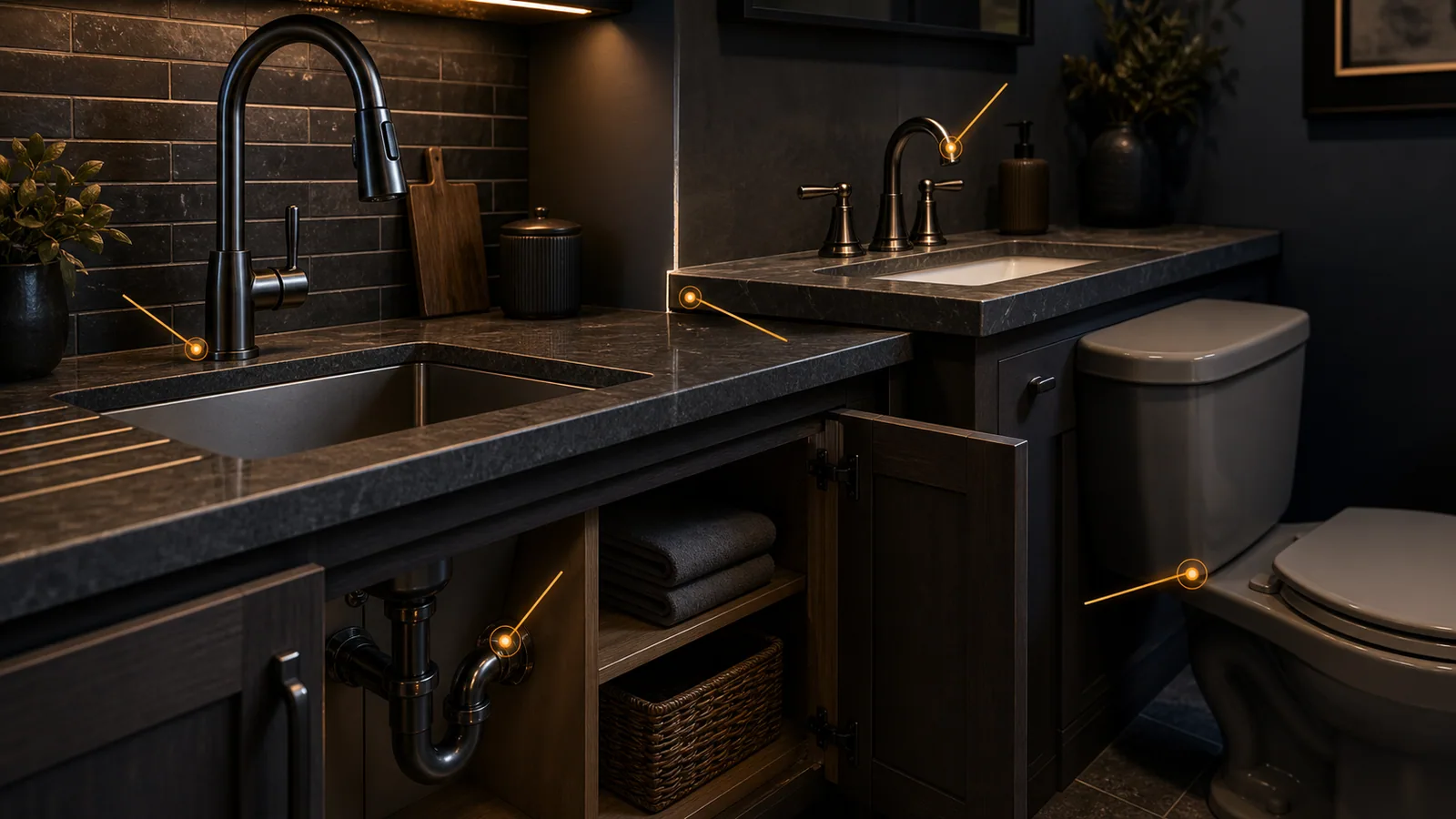
Faucet spout or handle
Show whether water appears at the spout, around a handle, near the faucet body, or only during normal use.
Sprayer and hose path
Pull-down and side sprayer concerns should include the head, hose path if visible, docking point, and surrounding sink area.
Sink-edge and caulk lines
Water around the sink rim, faucet holes, counter edge, backsplash, or wall joint may involve surface movement or failed sealant.
Cabinet moisture
Moisture inside a cabinet should be shown with the full cabinet floor, side panels, visible connections, and nearby drain area.
Toilet-seat and accessory hardware
Loose toilet seats, towel bars, hooks, and small mounted accessories should be shown with their mounting points and surface condition.
Photos can clarify the visible symptom, but they are not a final diagnosis or a guarantee that the issue is localized.
Send when it happens, where it appears first, close-ups, wide views, safe cabinet photos, and fixture details.

Parts compatibility
Small fixture parts need to match the existing setup
Handles, sprayers, aerators, caps, mounting nuts, hoses, and other small fixture parts can look similar while using different dimensions or connection details. The existing setup and the supplied part should be reviewed together.
Model numbers, instructions, product links, cartridges, washers, seals, adapters, hoses, and visible fixture style can help identify whether the request is ready for a practical next step or needs a broader plan.
Fixture style
Single-handle, two-handle, centerset, widespread, pull-down, side-sprayer, and utility fixtures can use different parts.
Brand and model information
Include visible labels, product links, model numbers, packaging, receipts, and instructions when available.
Owner-supplied parts
Keep cartridges, washers, seals, sprayers, hoses, aerators, caps, adapters, and fasteners grouped together.
Older or corroded fixtures
Corrosion, damaged threads, discontinued parts, or brittle components can change whether a small repair remains practical.
Replacement boundaries
Fixture replacement, incompatible parts, or specialized equipment may need separate review from a small visible repair.
Similar-looking faucet and fixture parts should not be assumed interchangeable without brand, model, and fit context.
Share complete fixture photos, model information, supplied parts, packaging, instructions, and visible connection context.
Fixture and surface review
The fixture and surrounding surfaces should be reviewed together
A faucet or small fixture that shifts during normal use may involve loose mounting hardware, sink-deck condition, failed caulk, surface movement, or damaged surrounding material.
Countertops, sink rims, backsplashes, cabinet panels, tile, laminate, stone, wood, and old sealant should be shown together before a cosmetic repair or resealing request is assumed.
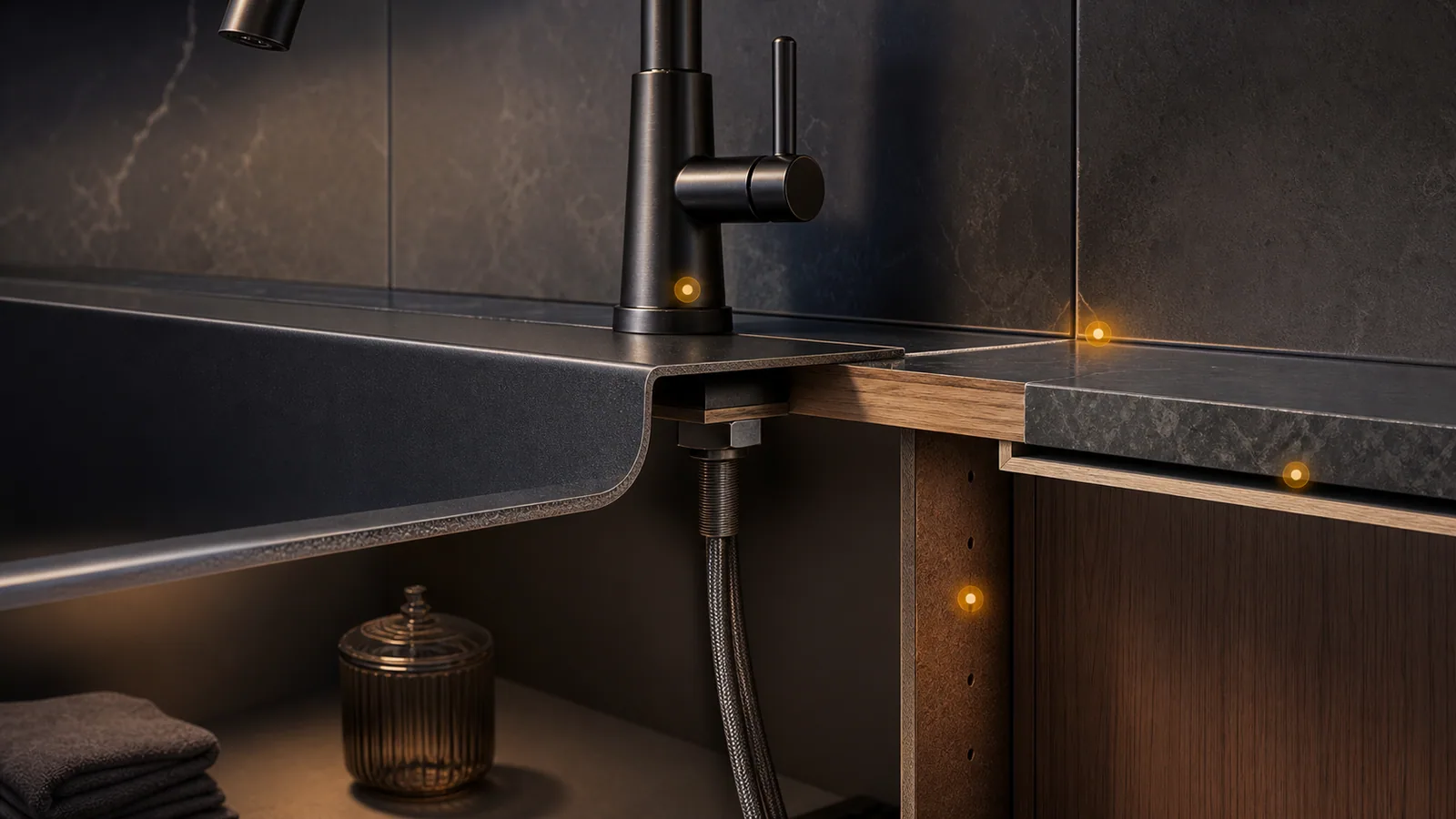
Faucet stability
Show whether the fixture rocks, rotates, or shifts during normal use and where movement appears.
Sink-edge caulk
Failed caulk around the sink, backsplash, countertop, wall, and fixture edge should be shown with the full joint visible.
Water collection points
Moisture near faucet holes, escutcheon plates, sink rims, and counter edges should be documented with surrounding material.
Cabinet and finish condition
Swollen laminate, loose tile, cracked stone, soft wood, peeling finish, or stained cabinet panels can affect the repair path.
Splashback or repeated moisture
The pattern of moisture matters. Show whether water appears only after use or keeps returning in the same location.
Active moisture or damaged surfaces may need attention before a cosmetic reseal or surface repair is planned.
Send faucet movement, sink edge, caulk, backsplash, counter, cabinet, and surface-condition photos together.

Under-sink access
Existing connections and under-sink access affect the scope
The space beneath the sink helps show whether the fixture is accessible, which visible connections are present, and whether surrounding cabinet surfaces remain dry and intact.
Shutoff valves, supply lines, faucet mounting, drain components, disposals, filters, sprayer hoses, stored items, and tight layouts should be documented safely without disconnecting anything.
Shutoff visibility
Photograph hot and cold shutoff valves and show whether they are visible and reachable. Do not force questionable valves.
Supply-line condition
Show visible lines, fittings, corrosion, kinks, staining, moisture, coverings, and connection areas.
Drain-area context
Include drain, trap, disposal, filter, sprayer hose, and nearby fixture areas so water sources are not confused.
Cabinet condition
Cabinet floors and side panels should be shown for swelling, staining, softness, old repairs, or dry intact surfaces.
Access limits
Stored items, narrow layouts, shelves, disposals, filters, and tight cabinets can affect whether the visible scope is practical.
Damaged valves, leaking supply lines, active drain leaks, concealed piping, or water from an uncertain source should be separated from minor handyman review.
Send cabinet photos, visible shutoffs, supply lines, drain context, mounting points, stored-item access, and cabinet condition.
Estimate factors
What affects a faucet and minor plumbing repair estimate
The scope depends on the number and type of fixtures involved, the visible symptom, part compatibility, under-sink access, surface condition, and whether the request stays within localized handyman review.
Functional repair, fixture replacement, caulk work, cabinet-surface repair, and finish matching should be separated so the request stays clear.
Fixtures
Number and type of faucets, toilet seats, sprayers, bathroom accessories, laundry fixtures, or utility-sink items.
Symptoms
Dripping, looseness, staining, failed caulk, visible moisture, rocking fixtures, or damaged hardware should be documented.
Parts
Model identification and compatible owner-supplied components can affect whether the request is ready.
Access
Cabinet space, disposals, filters, shelving, stored items, narrow rooms, and fixture location can change review.
Surfaces
Countertop, sink deck, backsplash, cabinet, tile, trim, and caulk condition can affect repair scope.
Existing conditions
Corrosion, failed previous repairs, questionable valves, moisture, damaged surfaces, or uncertain water sources may expand the request.
Photos help review the visible scope, but they do not guarantee a final diagnosis or fixed minor-plumbing package.
Include fixture count, symptoms, part details, access, surfaces, existing conditions, and any broader plumbing concern.
Project boundaries
When a minor plumbing request may need a different provider
Some fixture and under-sink concerns extend beyond routine handyman work. Damaged valves, failed supply lines, concealed plumbing, drain changes, gas-related work, and uncertain active leaks should be separated from small visible repairs.
Related caulk, cabinet hardware, toilet-seat, fixture-mounting, trim, and surface items can still be included in the same request when each item is documented clearly.
Work outside minor plumbing-adjacent repair
Valve problems
Leaking, seized, corroded, missing, or inaccessible shutoff valves may need a plumbing provider first.
Supply or drain damage
Damaged supply lines, fittings, pipes, traps, drains, disposals, or active drain leaks should be separated.
Concealed or new plumbing
New water lines, relocated plumbing, valve replacement, wall opening, and concealed piping require a different plan.
Whole-system symptoms
Pressure, drainage, repeated backups, or water problems affecting multiple fixtures should not be treated as a small fixture request.
Water damage
Widespread cabinet swelling, soft flooring, wall damage, rot, mold concerns, or uncertain water sources need broader review.
Specialized systems
Gas, water heater, sump, sewer, commercial, manufacturer-controlled, or regulated systems may need another provider.
HammerNest keeps minor plumbing-adjacent requests focused on visible, localized conditions and clear boundaries.
Share each localized item and flag valve, drain, concealed plumbing, active water, or specialty concerns separately.
Service hub
Related faucet and fixture repair paths.
These pages may fit the same faucet, fixture, caulk, cabinet, appliance, or small property-maintenance request.
 Fix a Leaky FaucetNeed help with a leaky faucet near Freeport? Send photos and fixture details so HammerNest can review the repair path and next step.View Service ->
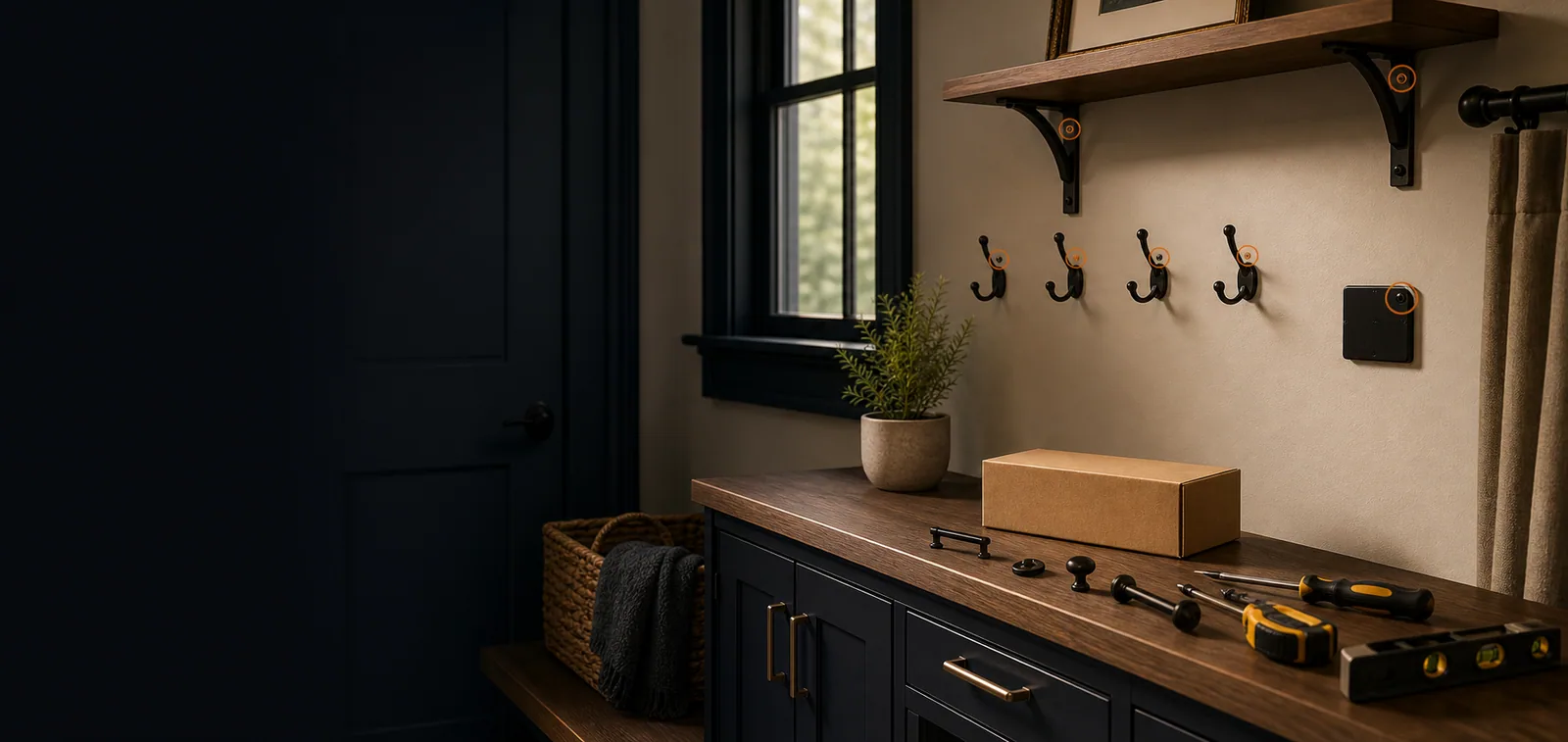 Fixture & Hardware Installation in Freeport, ILInstall curtain rods, blinds, bathroom accessories, hooks, organizers, cabinet handles, and small wall fixtures near Freeport, IL.View Service ->
 Weatherproofing and CaulkingNeed weatherproofing and caulking in Freeport, IL? HammerNest reviews photos, scope, materials, and timing for practical handyman help nearby.View Service ->
 Request EstimateSend photos, timing, property details, and repair notes so HammerNest can review your handyman request before the next step.View Service ->


 Not sure if we cover your area?


