
Weatherproofing and Caulking
HammerNest helps homeowners around Freeport, IL review practical caulking and weatherproofing requests for doors, windows, trim, tubs, sinks, wet areas, and small exterior gaps.
Fast response. Quality work. Fair pricing.
Caulking scope
Weatherproofing and caulking for common home gaps in Freeport, IL
HammerNest reviews failed or separated caulk around exterior doors, windows, trim, siding transitions, small wall penetrations, tubs, showers, sinks, backsplashes, countertops, and bathroom trim.
The joint width, surrounding materials, movement, moisture exposure, and condition beneath the old caulk should be reviewed together before the request is treated as a simple bead replacement.
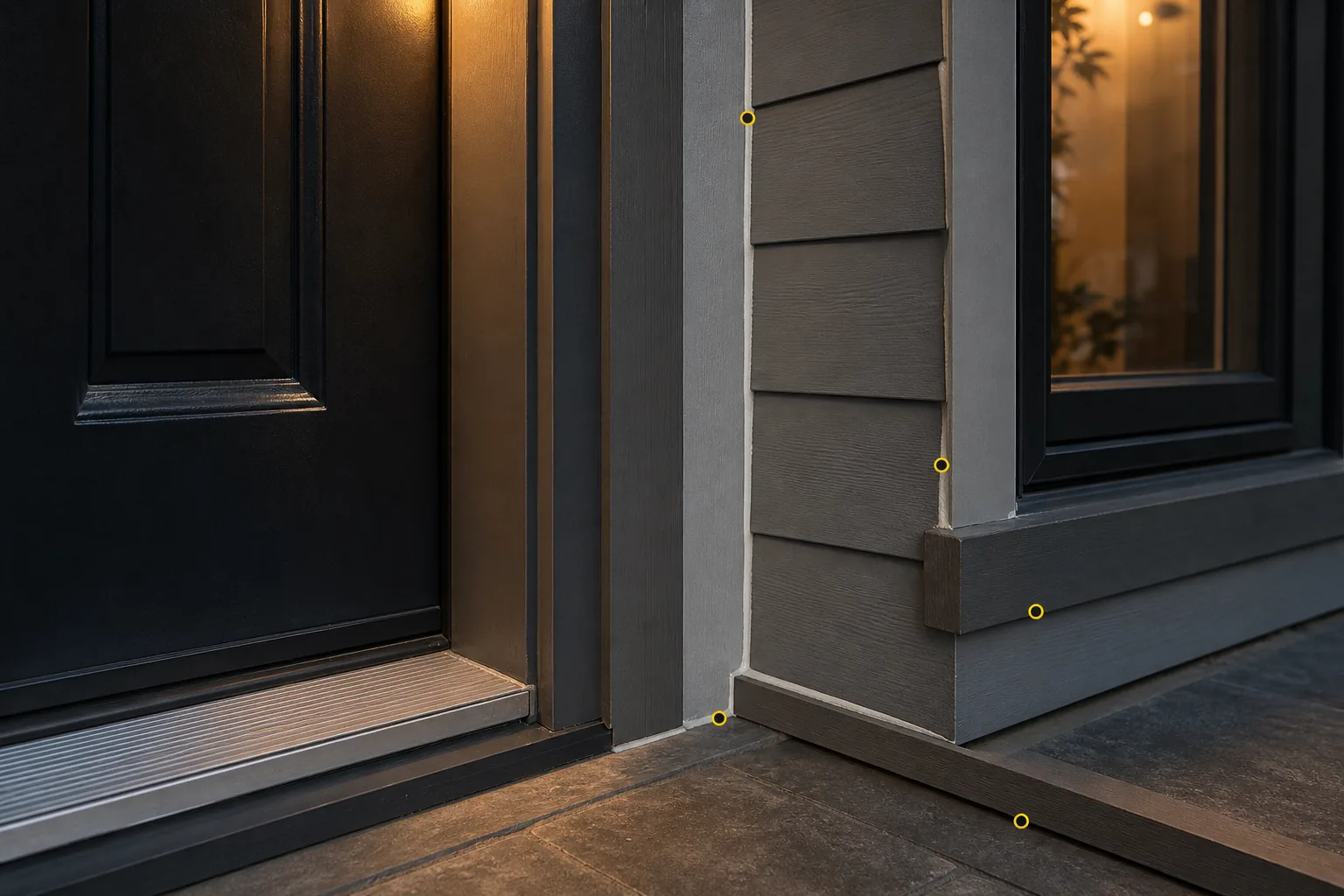
Exterior trim gaps
Separated beads around doors, windows, siding transitions, trim, and small wall penetrations can allow visible gaps to spread.
Interior wet areas
Tubs, showers, sinks, backsplashes, countertops, and bathroom trim often need review when caulk cracks, peels, or discolors.
Repeatedly opening joints
A joint that reopens after caulking may be moving, too wide, poorly bonded, or attached to a damaged surface.
Draft concerns
Caulk can help where a visible gap exists, but it does not solve every air movement, insulation, or wall-assembly issue.
Full repair lists
Kitchen, bathroom, entry, basement, laundry, porch, and exterior trim items can be sent together when the sealing list is connected.
Send the full sealing and repair list once when several doors, windows, wet areas, or exterior trim joints need review.
Include wide photos, close-ups, material notes, and when the gap opens or moisture appears.
Project intake checklist
What to send with your weatherproofing and caulking request
Clear photos and basic measurements help show the location, materials, damage, moisture history, and access before the scope is reviewed.
Full area view
Take one wide photo showing the complete door, window, tub, sink, wall, trim run, or exterior area containing the failed joint.
Close-up damage
Add close photos of cracking, separation, peeling, gaps, discoloration, softness, old sealant layers, or water staining.
Both sides when useful
Photograph both sides of a door or window when accessible so the interior and exterior conditions can be compared.
Size and count
Include approximate joint length, gap width, and the total number of affected areas.
Material and timing
Note surrounding materials and whether the issue appears during rain, bathing, seasonal movement, door movement, or normal use.
Phone photos are enough when they clearly show the full area, the failed joint, the surrounding material, and any access limits.
Show furniture, landscaping, fixtures, stairs, or narrow spaces that may affect access.
How it works
How the caulking request works.
A simple repair flow from joint details to follow-up.
- Send repair detailsShare photos, location, urgency, and the best way to reach you.
- Upload photos if helpfulWide and close-up photos make the first review clearer.
- Choose call or text follow-upTell us how you prefer to handle the next step.
- Get the next stepIf the job fits, timing, materials, and the repair plan are confirmed.


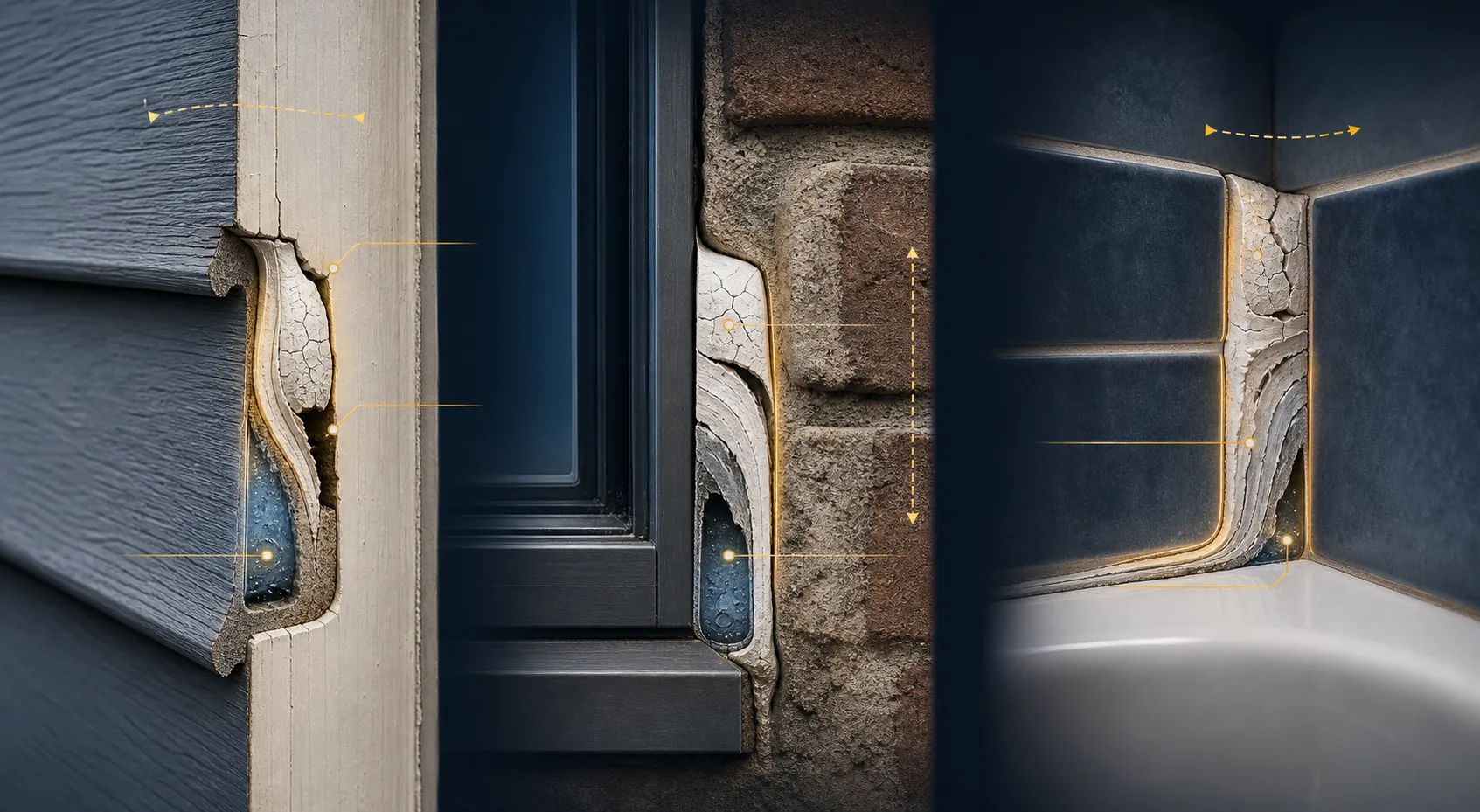
Joint condition check
Caulk failure usually starts with the joint, surface, or movement around it
Adding another bead over a visible gap may not address why the seal failed. Materials expand, contract, flex, settle, and move differently.
Old caulk may lose adhesion, become brittle, shrink, peel, or trap moisture beneath additional layers, especially when the surrounding surface is damp, dirty, glossy, or deteriorated.
Movement
Seasonal temperature and humidity changes can make weak joints reopen when adjoining materials move differently.
Adhesion
Brittle, shrinking, peeling, or poorly bonded caulk may separate instead of flexing with the joint.
Surface
Damp, damaged, dirty, glossy, or deteriorated surfaces can prevent new sealant from bonding well.
Joint size
A gap may be too deep, too wide, uneven, or unstable for a simple surface application.
Previous repairs
Multiple old layers, loose filler, and trapped moisture should be considered before the visible joint is evaluated.
Cracked trim, loose tile, shifting frames, swollen material, and damaged substrates should be described as part of the same joint condition.
Show the failed bead, the material on both sides, and whether the gap has returned after prior caulking.
Door and window check
Door and window gaps should be checked from both sides
Visible perimeter gaps may involve exterior casing, brickmould, siding, masonry, sill areas, interior casing, frame movement, wall movement, or damaged trim.
Weatherstripping, sweeps, thresholds, and moving door parts are different from stationary caulk joints and should be described separately.
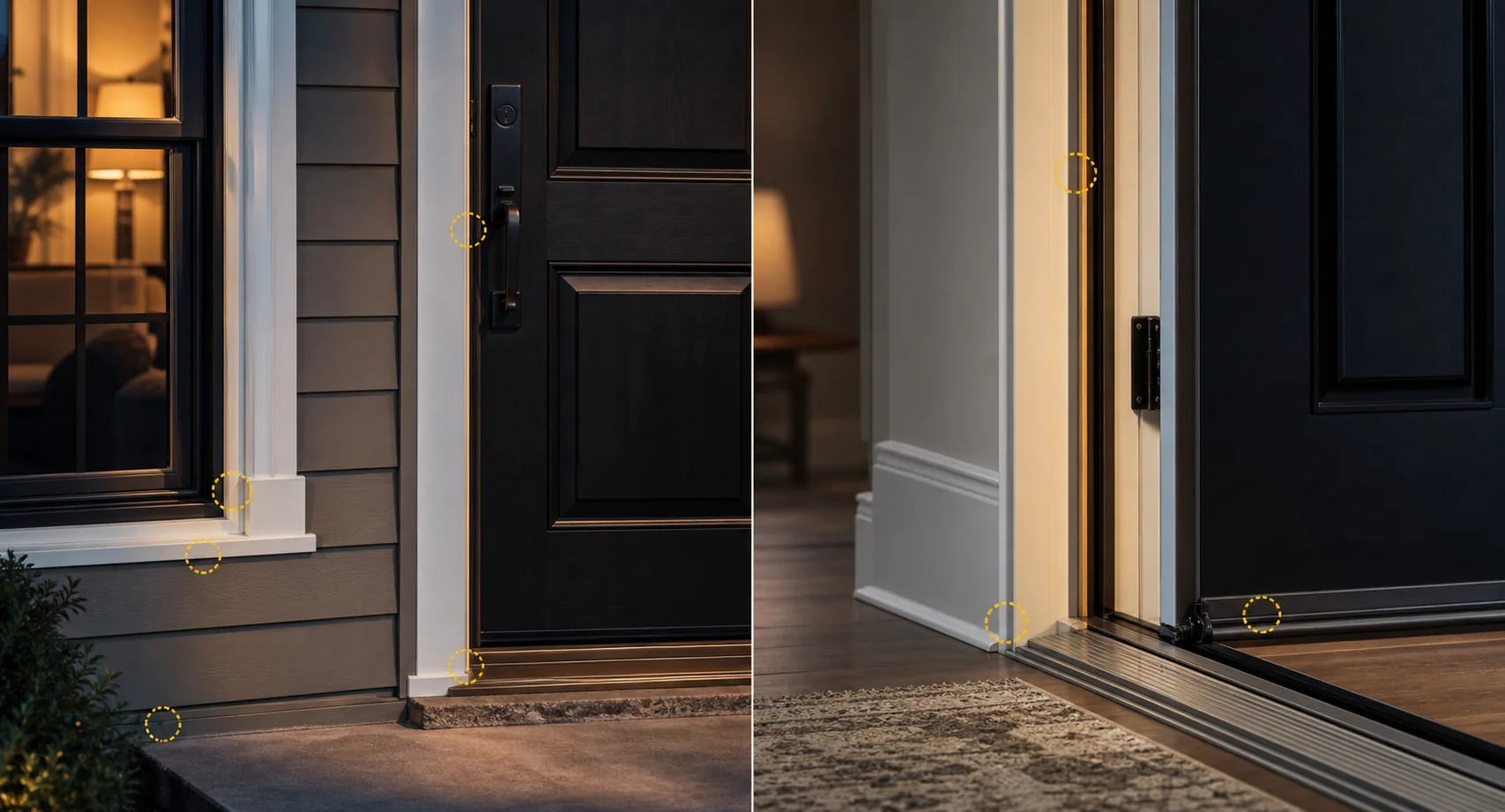
Exterior joint
Exterior casing, brickmould, siding, masonry, and sill areas should be photographed closely when the perimeter bead has failed.
Interior joint
Interior casing gaps can involve finish caulk, frame movement, wall movement, or damaged trim.
Threshold
Thresholds, sweeps, and weatherstripping should be distinguished from stationary caulk joints.
Frame movement
A door that rubs, shifts, or no longer closes evenly may repeatedly reopen nearby sealant.
Material condition
Soft wood, swelling, rot, loose trim, or failed frame components may need attention before resealing.
Condensation, staining, or moisture at a window does not automatically mean perimeter caulk is the only problem.
Show the inside, outside, threshold, trim, and any moving door or frame condition.
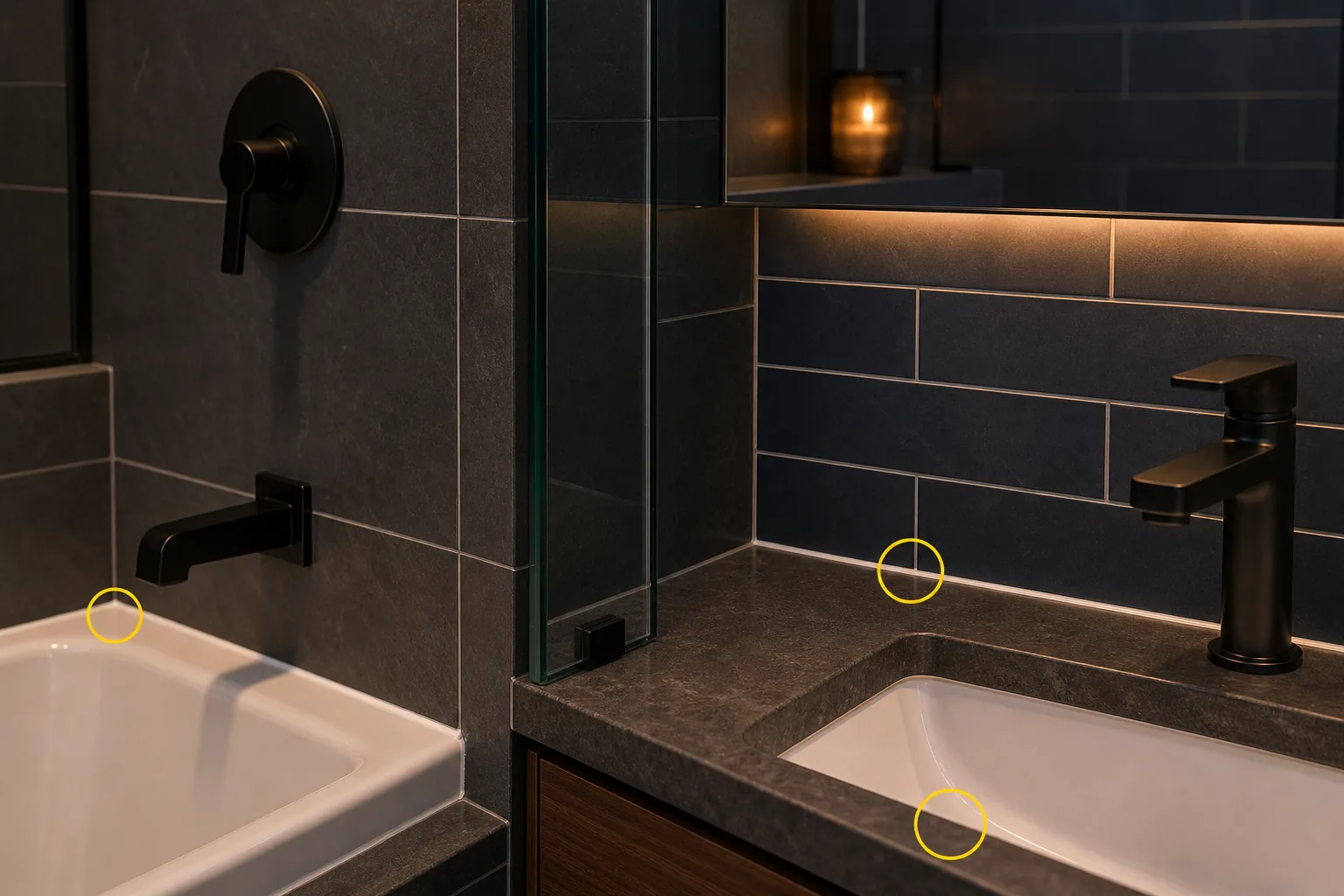
Wet-area check
Wet-area caulk should be reviewed with the surrounding surfaces
Tubs, shower bases, sinks, backsplashes, countertops, and fixture transitions can fail where two surfaces meet and move differently.
Cracking, peeling, separation, discoloration, mildew staining, recurring moisture, loose tile, damaged grout, swollen trim, or soft drywall may point beyond cosmetic caulk replacement.
Tub
Tub edges can reopen when the tub, wall, tile, or surrounding material moves under normal use.
Shower
Shower-base and glass-edge joints should be reviewed with nearby tile, grout, and visible moisture conditions.
Sink
Sink and fixture transitions may involve counter movement, splash exposure, or old layers beneath the visible bead.
Backsplash
Backsplash joints can crack or discolor where tile, wall, and countertop materials meet.
Surface condition
Active plumbing leaks, failed waterproofing, damaged wall systems, or widespread mold should be handled separately from cosmetic caulk replacement.
Old caulk layers, damaged grout, soft drywall, and recurring moisture should be shown before assuming a small bead refresh is enough.
Show the full fixture, the failed joint, nearby grout or tile, and whether moisture is active or recurring.
Exterior material check
Exterior sealant should match the joint and weather exposure
Exterior sealing depends on the materials meeting at the joint and how that location is exposed to sun, rain, snow, freeze-thaw movement, shade, and drying conditions.
Wood
Painted wood and composite trim may move, crack, rot, or lose paint around joints that need to remain sound.
Vinyl
Vinyl siding and trim can move with temperature changes and should not be treated like a rigid painted joint.
Masonry
Brick, concrete, stone, and block transitions can involve cracks, texture, and weathering that caulk alone may not solve.
Metal
Metal flashing, frames, and penetrations can expand, corrode, or need different review than wood or vinyl.
Penetrations
Small utility penetrations should be photographed with the full wall area and any nearby trim, siding, or masonry.
Weather exposure
Peeling paint, rotted trim, cracked masonry, loose siding, or failed flashing cannot be corrected by caulk alone.
Functional sealing, paint-ready preparation, color, texture, and cosmetic matching should be treated as related but separate goals.
Estimate factors
What affects a weatherproofing and caulking estimate
One short interior joint is different from removing several failed exterior beads, working around wet-area fixtures, or addressing damaged surrounding material.
Scope
The number, length, width, depth, and location of affected joints affects how the request is reviewed.
Location
Interior and exterior joints face different moisture, access, finish, and weather-exposure conditions.
Joint
Stationary trim joints, moving doors or windows, wet areas, and connected transitions should be described separately.
Surface
The materials meeting at the joint and whether the surrounding surfaces remain sound can change the scope.
Access
Tubs, fixtures, furniture, landscaping, stairs, elevated windows, and narrow exterior spaces can affect access.
Existing conditions
Failed caulk, multiple old layers, loose filler, damaged paint, deteriorated material, and finish expectations should be noted before follow-up.
Before sending the request, gather wide photos, close-ups, joint measurements, material details, moisture timing, and whether the goal is functional sealing, paint-ready prep, color matching, or related trim repair.
Clear details help HammerNest review the practical next step without guessing from one close-up.
Project boundaries
When caulking or weatherproofing may need a different plan
Some gaps and stains are symptoms of roof, siding, flashing, window-system, plumbing, foundation, drainage, or full building-envelope problems rather than localized caulk failure.
Related repairs can still be included in one request, but one submitted list does not guarantee every item uses the same repair approach or fits one appointment.
May need a different specialist or plan
Active exterior leaks
Roof, siding, flashing, window-system, or foundation leaks may require the appropriate specialist before cosmetic sealing.
Plumbing leaks
Leaks behind tubs, sinks, showers, or fixtures should be corrected before wet-area caulk is replaced.
Widespread damage
Rot, soft framing, major plaster or drywall failure, and substantial mold concerns may require broader repair.
Basement or foundation water
Foundation cracks, drainage systems, and full waterproofing work fall outside a localized caulking request.
Large replacement work
Major siding replacement, window replacement, door-frame reconstruction, or failed exterior assemblies may need a different contractor.
Related small repairs
Door repair, minor plumbing repair, deck repair, trim repair, and small drywall repairs can be included when they affect the same area.
Photograph the failed joint and the surrounding repair context so the request can be reviewed responsibly.
Service hub
Related sealing and repair help.
These pages may fit connected door, trim, plumbing, deck, or drywall issues in the same repair list.
 Door RepairNeed door repair in Freeport, IL? HammerNest reviews photos, scope, materials, and timing for practical handyman help nearby.View Service ->
 Faucet and Minor Plumbing RepairsNeed faucet and minor plumbing repairs in Freeport, IL? HammerNest reviews photos, scope, materials, and timing for practical handyman help nearby.View Service ->
 Deck RepairNeed deck repair in Freeport, IL? HammerNest reviews photos, scope, materials, and timing for practical handyman help nearby.View Service ->
 Trim and Molding RepairNeed trim and molding repair in Freeport, IL? HammerNest reviews photos, scope, materials, and timing for practical handyman help nearby.View Service ->


 Not sure if we cover your area?


