
Fix Loose Railings
HammerNest helps homeowners around Freeport, IL review loose deck railings, porch rails, stair handrails, newel posts, balusters, brackets, anchors, and small railing connection problems.
Fast response. Quality work. Fair pricing.
Railing repair scope
Loose railing repair for homes in Freeport, IL
HammerNest reviews loose railing problems on decks, porches, exterior steps, interior stairways, landings, and short entry platforms around Freeport, IL.
The visible railing is only part of the assembly. The rail, post, brackets, anchors, bolts, mounting surface, and support behind the connection should be reviewed together.
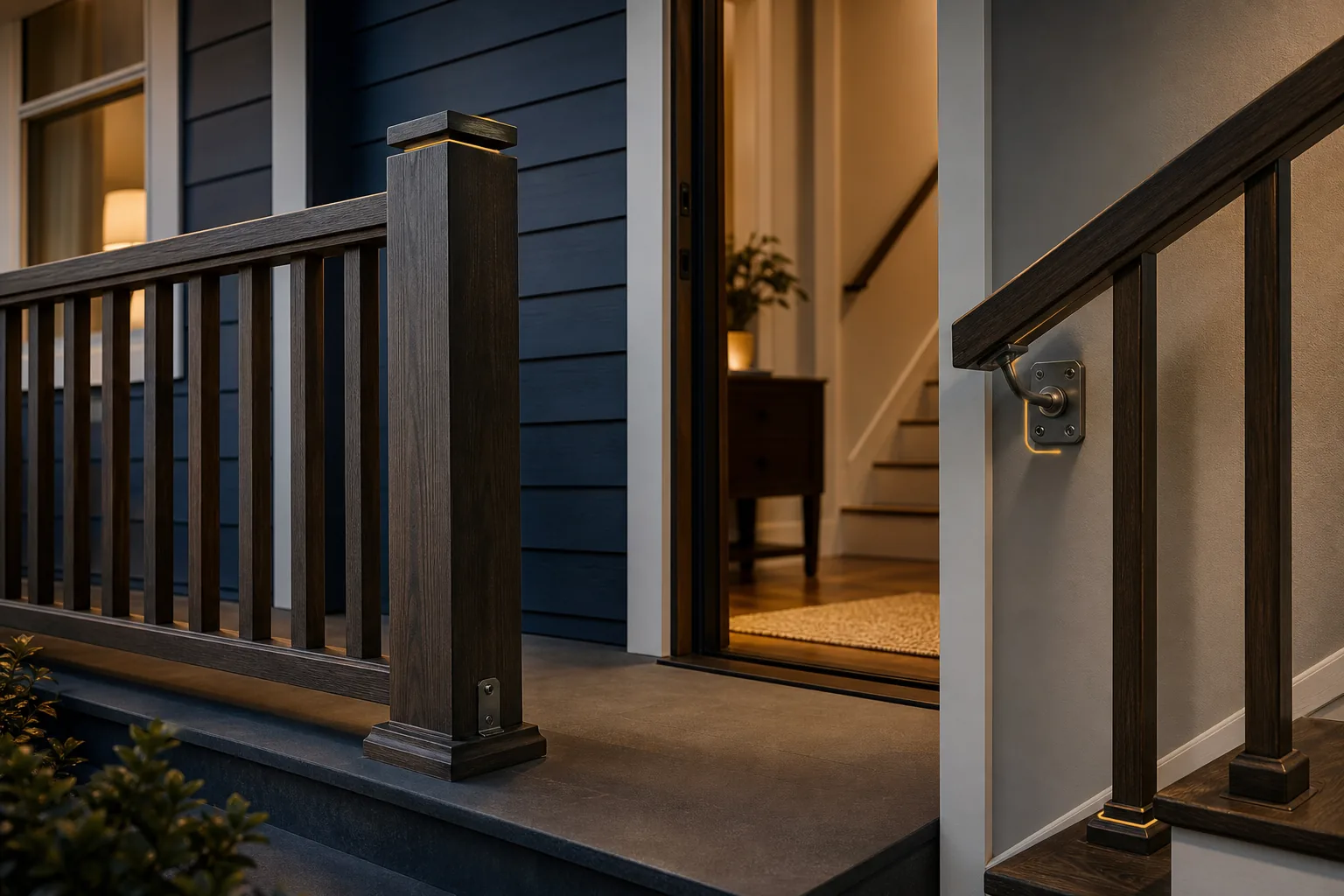
Deck and porch railings
Rail sections that wobble, lean, or move when handled may involve posts, brackets, framing, or weather-exposed hardware beneath them.
Stair handrails
Interior and exterior handrails that flex or pull away should be checked at each bracket, return, post, and connection along the stair run.
Newel posts and balusters
A loose newel post or several moving balusters may point to movement in the surrounding rail assembly, stair framing, or post attachment.
Entry and landing railings
Short railings beside steps, porches, or entry platforms can loosen at the base, mounting surface, or connection to the adjoining structure.
Fasteners and hardware
Loose screws, brackets, anchors, bolts, caps, and connector plates may be visible, while damaged holes or weakened material prevent hardware from holding correctly.
Send photos of the full railing from several angles, plus close-ups of each moving post, bracket, anchor, and connection. Mention whether nearby stairs, deck boards, walls, concrete, or framing move too.
Share what moves, where it is attached, and whether the same movement has returned after previous tightening.
Project intake checklist
What to send with your loose-railing request
A few clear photos and basic details help show where the railing moves, what it is attached to, and whether the issue appears limited to one connection or affects the surrounding stairs, deck, wall, or landing.
Full railing view
Take one wide photo showing the entire railing, nearby stairs or landing, and surrounding area, including deck boards, walls, concrete, posts, or framing.
Moving connection points
Add close photos of every loose post, bracket, anchor, bolt, screw, rail joint, mounting plate, visible gap, stripped hole, crack, or separated material.
Multiple angles
Photograph the railing from both sides and from below when the area is safely accessible so hidden connections can be reviewed.
Size, location, and material
Include approximate railing length, number of moving sections, location, and whether it appears to be wood, metal, vinyl, composite, or wall-mounted.
Describe the movement
Explain whether the top rail shifts, the post rocks, the handrail pulls from the wall, balusters move together, or nearby stairs and surfaces move too.
Phone photos are enough when they clearly show the full railing assembly, loose connections, and the surface or structure supporting it.
How it works
How the railing repair request works.
A simple repair flow from railing details to follow-up.
- Send repair detailsShare photos, location, urgency, and the best way to reach you.
- Upload photos if helpfulWide and close-up photos make the first review clearer.
- Choose call or text follow-upTell us how you prefer to handle the next step.
- Get the next stepIf the job fits, timing, materials, and the repair plan are confirmed.


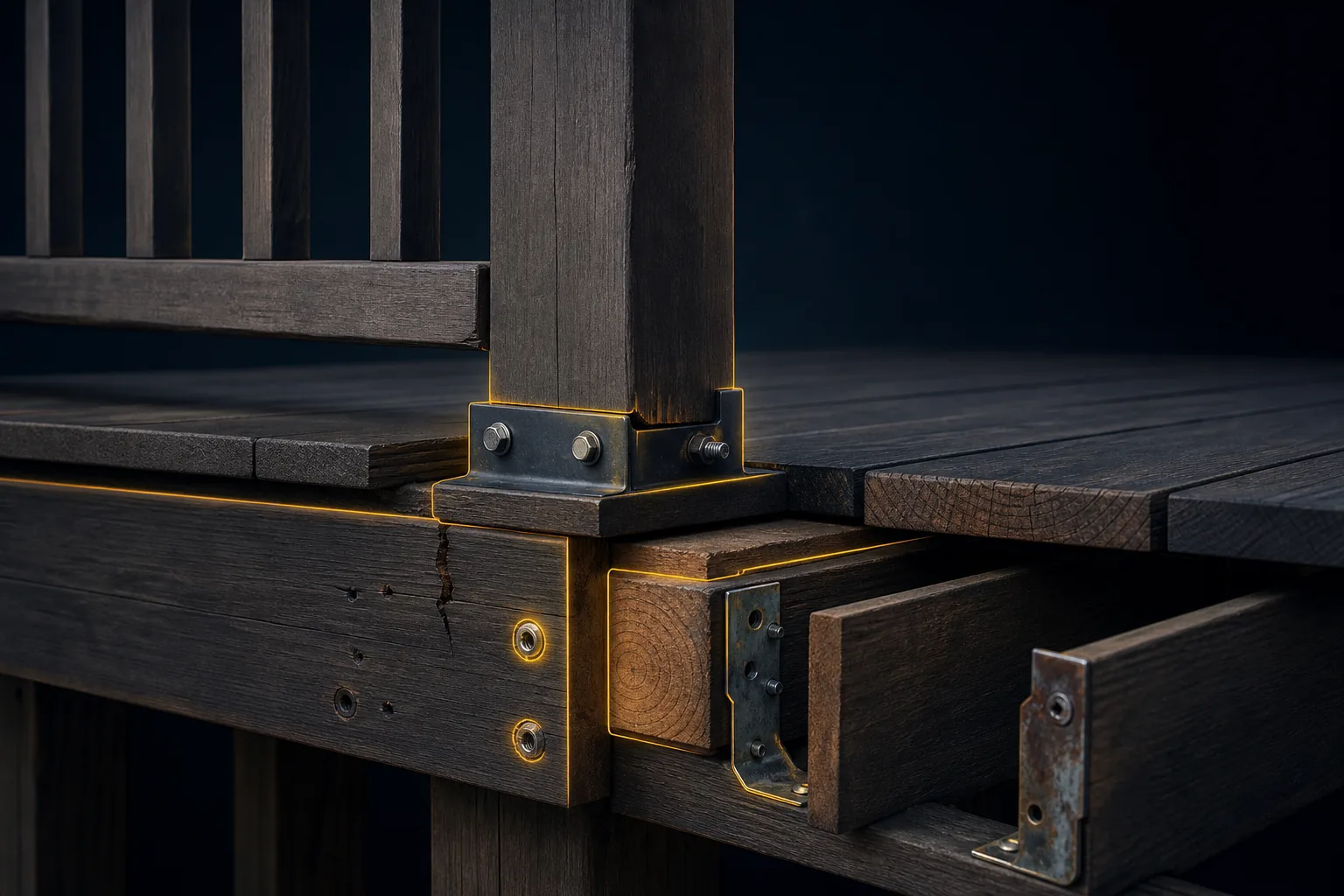
Connection and support check
Railing movement usually starts at the connection or support below it
A loose railing is not always fixed by tightening the most visible screw. Movement can begin at the post, bolts, brackets, anchors, blocking, framing, or wall material supporting the railing.
Stripped holes, corrosion, split or softened wood, failed anchors, and older repairs can keep hardware from holding securely.
Post
A post that rocks, twists, or shifts at its base can move the entire railing section. The post and the material supporting it should be checked together.
Fasteners
Loose bolts, screws, anchors, and brackets may be worn, corroded, damaged, or pulling through weakened material rather than simply needing tightening.
Blocking
Blocking and other support behind the visible surface help keep railing posts and brackets stable. Missing or damaged support can allow the connection to keep moving.
Mounting surface
Wood, drywall, plaster, concrete, masonry, and composite materials hold anchors differently, especially when holes are enlarged or the material is softened.
Connected structure
Movement in nearby deck framing, stair components, walls, landings, or boards can transfer into the railing until the supporting area is addressed.
Send close-up photos of the moving connection and wider photos showing what the railing attaches to. Mention whether movement returned after previous repair attempts.
Show the post base, brackets, anchors, wall connection, nearby stair parts, and any hardware that no longer holds.
Railing type and location
The railing type and mounting location change what should be checked
Not every loose railing uses the same connections. Material, location, mounting surface, and surrounding structure all affect where movement may begin and what details should be included in the request.
Deck and porch railings
Posts, brackets, fasteners, blocking, and weather-exposed framing should be reviewed together when exterior rail sections move.
Exterior stair rails
Check where the rail connects to stairs, landings, posts, or adjoining structures, especially when weather exposure or worn stair parts are nearby.
Interior stair handrails
Wall-mounted handrails may loosen at brackets, anchors, or the wall material behind them. Show every bracket and the wall around it.
Newel posts and balustrades
A shifting newel post can affect the handrail and several nearby balusters, so the base, stair structure, rail joints, and trim should be reviewed together.
Metal, vinyl, and composite systems
Some railing systems use specific brackets, caps, connectors, and mounting components that need to match what is already installed.
Concrete or masonry-mounted rails
Loose rails attached to concrete, brick, block, or stone may involve the anchor, mounting plate, drilled opening, or surrounding material.
The same amount of movement can have a different cause depending on whether the rail is attached to wood framing, a wall, stairs, or masonry.
Support condition check
The surface supporting the railing matters too
A loose railing can be the visible symptom of movement in the deck, stairs, wall, landing, or masonry supporting it.
Several loose sections, repeated movement, moisture damage, or deterioration across connected components may point to a broader repair need.
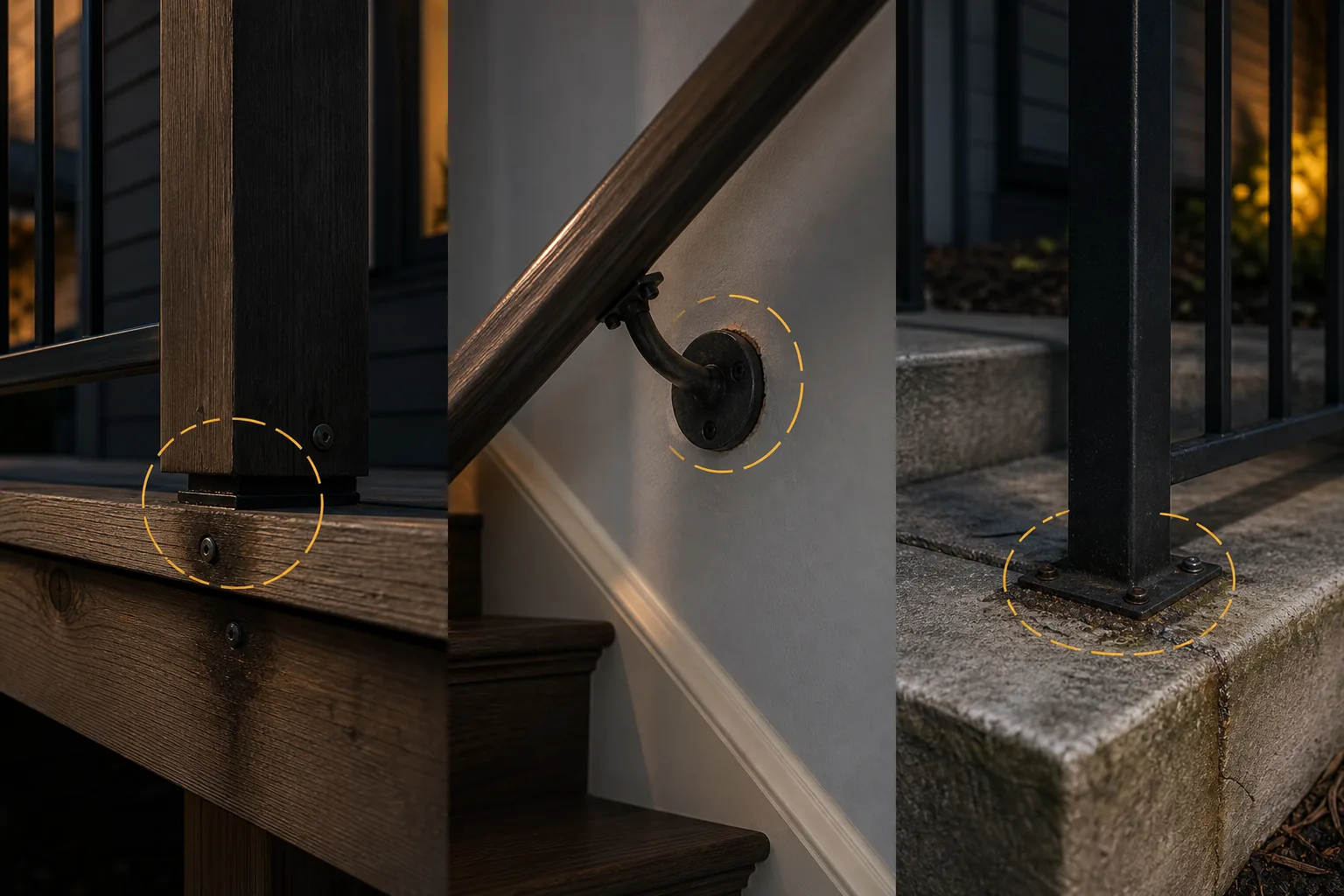
Deck
Loose deck boards, weakened rim framing, moving edge components, or damaged post connections can allow an attached railing to shift.
Stairs
Movement in treads, stringers, landings, or newel-post locations can transfer into the handrail or balustrade.
Wall
Wall-mounted handrails depend on secure brackets, anchors, backing, and sound drywall or plaster around the connection.
Masonry
Concrete, brick, block, and stone connections can loosen when anchors corrode, drilled openings enlarge, or surrounding material cracks.
Moisture
Water exposure can soften wood, swell compressed materials, corrode hardware, and weaken the area around mounting points.
When several posts, brackets, stair parts, or railing sections move together, the supporting deck, wall, landing, or stair assembly should be reviewed as part of the same request.
Show the full area around the railing so the request is not limited to one close-up of a bracket or screw.
Estimate factors
What affects a loose-railing repair estimate
The repair scope depends on where the movement starts, how much of the railing is affected, and what supports the connection.
Scope
The number, length, material, and location of affected railing sections influence how much hardware, support, and surrounding structure should be reviewed.
Location
Deck rails, porch rails, interior handrails, stair balustrades, and masonry-mounted rails use different mounting surfaces and connection types.
Hardware
Bolts, screws, brackets, anchors, plates, caps, and system-specific connectors may need to be identified before compatible parts can be considered.
Support
Posts, blocking, framing, walls, stairs, concrete, brick, and other supporting material can make the repair more involved than tightening visible hardware.
Access
Elevated decks, narrow stairways, furniture, landscaping, pavement, and limited working space can affect how easily connection points can be reached.
Existing conditions
Failed fasteners, enlarged holes, corrosion, split material, and previous repairs may need attention before stabilization, matching, or broader support repair is reviewed.
Before sending the request, photograph every moving section and mounting point, note what moves during use, and show the surrounding deck, stairs, wall, concrete, or framing.
Clear details help HammerNest review the practical next step without guessing from one loose fastener.
Project boundaries
When a loose railing may need a broader repair plan
Some railing problems extend beyond one bracket, post, or loose section. Movement across a deck, stairway, porch, or landing may indicate that the supporting structure also needs to be reviewed.
Related small repairs can still be included in the same request, but submitting one complete list does not guarantee that every item will fit one appointment.
May need a different specialist or plan
Widespread structural movement
Movement across several railing sections, stair components, deck areas, or landing connections may make a localized railing adjustment impractical.
Rot, splitting, or unstable supports
Serious rot, split framing, unstable posts, or deterioration across multiple connections may require broader deck, porch, or stair repair.
Specialized railing systems
Custom-welded railings, glass panels, commercial systems, and specialized manufactured components may need a dedicated fabricator or installer.
Concrete and masonry deterioration
Large cracks, crumbling material, extensive corrosion, or failed anchor areas may need separate repair before the railing is remounted.
Wall or stair reconstruction
Significant wall movement, widespread plaster failure, damaged stair framing, or major stair reconstruction falls outside a localized handrail repair.
Related small repairs
Deck-board problems, loose stair components, weatherproofing concerns, and minor wall repairs can be included when they affect the same railing area.
Photograph every moving section and the surrounding deck, stairs, wall, landing, or masonry so the full context is clear.
Service hub
Related railing and property repair help.
These pages may fit nearby deck, stair, wall, or weatherproofing issues that are part of the same repair list.
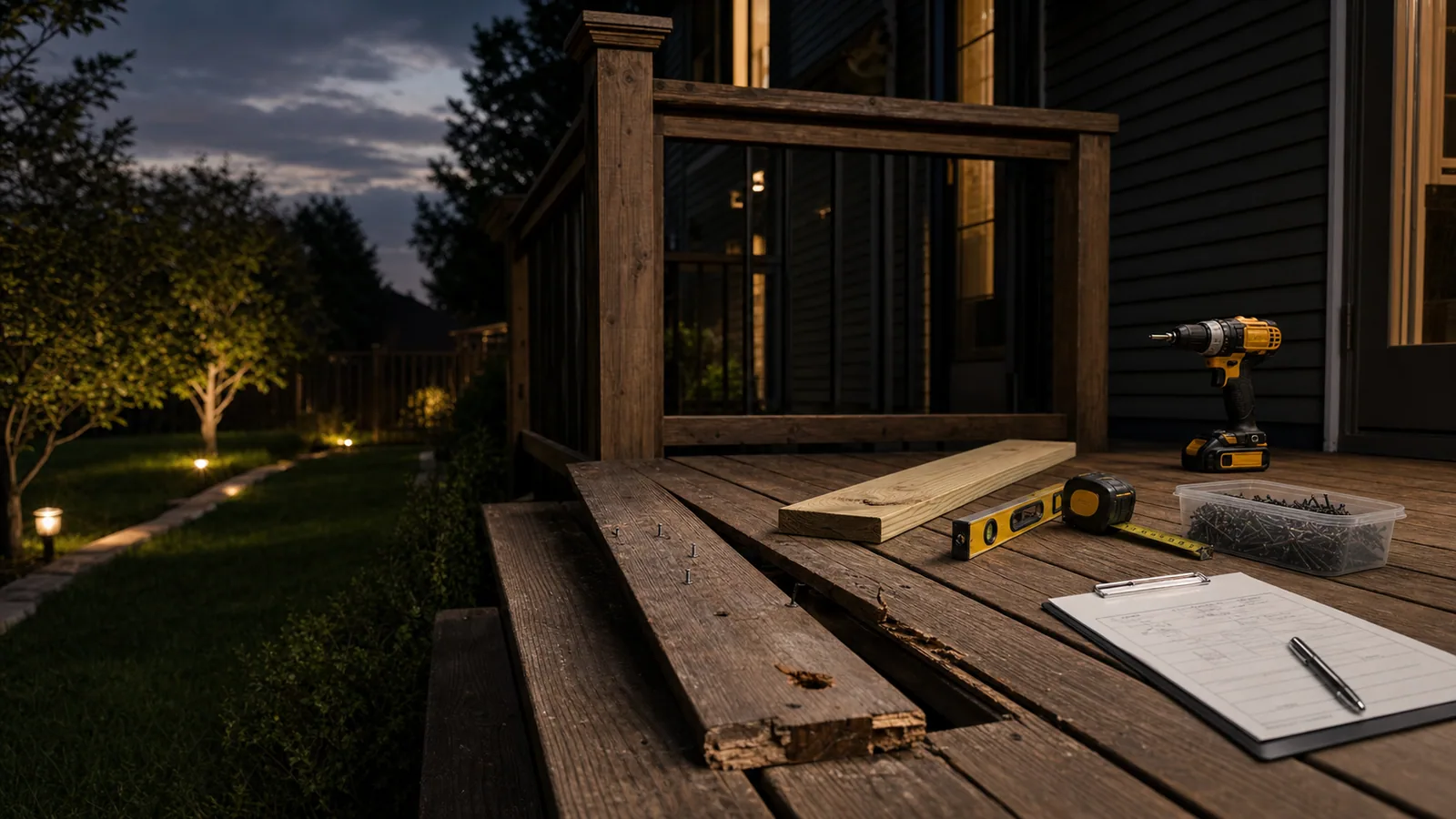 Deck RepairNeed deck repair in Freeport, IL? HammerNest reviews photos, scope, materials, and timing for practical handyman help nearby.View Service ->
 Door RepairNeed door repair in Freeport, IL? HammerNest reviews photos, scope, materials, and timing for practical handyman help nearby.View Service ->
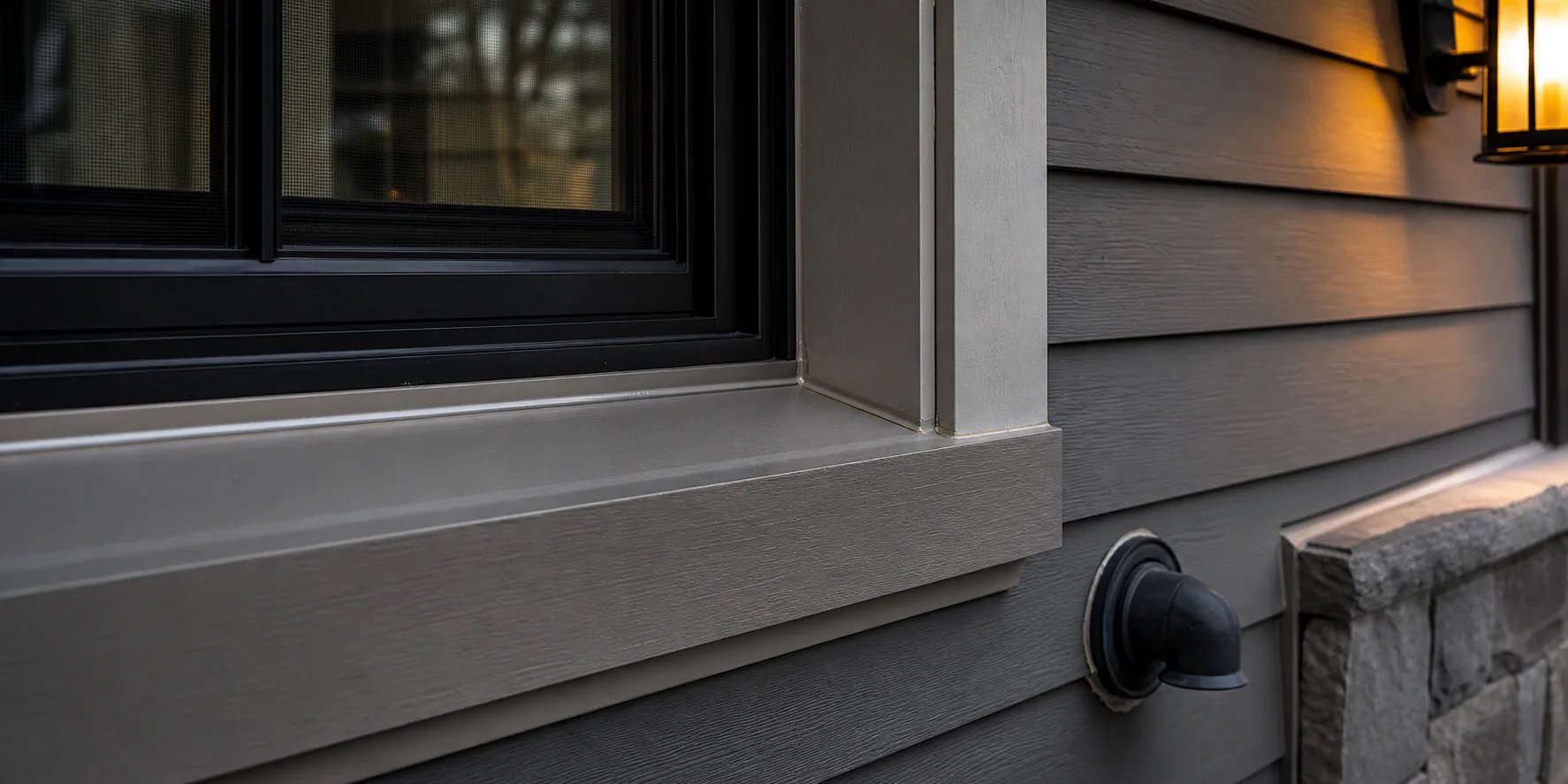 Weatherproofing and CaulkingNeed weatherproofing and caulking in Freeport, IL? HammerNest reviews photos, scope, materials, and timing for practical handyman help nearby.View Service ->
 Property Maintenance in Freeport, ILOrganize rental turnover repairs, deck fixes, fences, minor plumbing, light electrical tasks, and property punch lists near Freeport.View Service ->


 Not sure if we cover your area?


