
Drywall Repair in Freeport, IL
HammerNest reviews localized drywall holes, dents, cracks, failed patches, corner damage, ceiling openings, removed-mount damage, and paint-ready preparation requests around Freeport with clear photo and scope expectations.
Fast response. Quality work. Fair pricing.
Local drywall repair scope
Practical drywall repair help for Freeport homes
HammerNest reviews one focused drywall concern or a short list of localized wall and ceiling repairs for Freeport homeowners and property managers. Requests may involve small holes and dents, visible or failed patches, cracks, separated seams, damaged corner bead, or small ceiling openings.
Damage can also remain after shelving, television mounts, hooks, anchors, or other wall-mounted items are removed. Rental and occupancy-change maintenance may include these areas along with ordinary dents, patch buildup, or surface damage discovered after furniture and belongings are moved.
The visible damage, surrounding wall or ceiling surface, room access, finish expectations, and any signs of moisture should be reviewed together. Freeport properties may include older wall materials, updated interiors, basements, rental units, utility areas, and rooms altered over time, all of which can affect the practical scope.
Holes, dents, and removed mounts
Small impact marks, anchor holes, shelving damage, television-mount openings, and removed hooks should be shown with the complete surrounding wall and nearby trim or fixtures.
Cracks, seams, and failed patches
Reopened cracks, separated tape, raised patch edges, and visible compound buildup may involve earlier repairs or movement beyond the most obvious surface mark.
Corners and ceiling openings
Damaged corner bead, chipped outside corners, and localized ceiling openings should be documented with their dimensions, adjoining surfaces, and nearby lighting or mounted fixtures.
Paint-ready preparation expectations
Clarify whether the request is for localized repair, sanded paint-ready preparation, texture discussion, or a broader finish review. Paint-ready preparation does not automatically include painting or exact texture and color matching.
Moisture staining, softness, repeated cracking, older plaster, layered finishes, and previous repairs can change the scope beyond the visible drywall damage.
Send wide photos, close-ups, rough measurements, access details, finish expectations, and any visible moisture so HammerNest can review the Freeport drywall repair request.
Drywall damage and scope details
Common drywall damage and what changes the repair scope
Drywall damage can look similar at first glance while involving different surfaces, backing conditions, and previous repair materials. A small dent, reopened seam, failed patch, damaged corner, or ceiling opening should be reviewed with the surrounding wall rather than as an isolated mark.
The size and depth of the opening, available backing, nearby trim or fixtures, existing texture, earlier compound or filler, and movement around the area can all affect the practical repair approach and finish expectations.
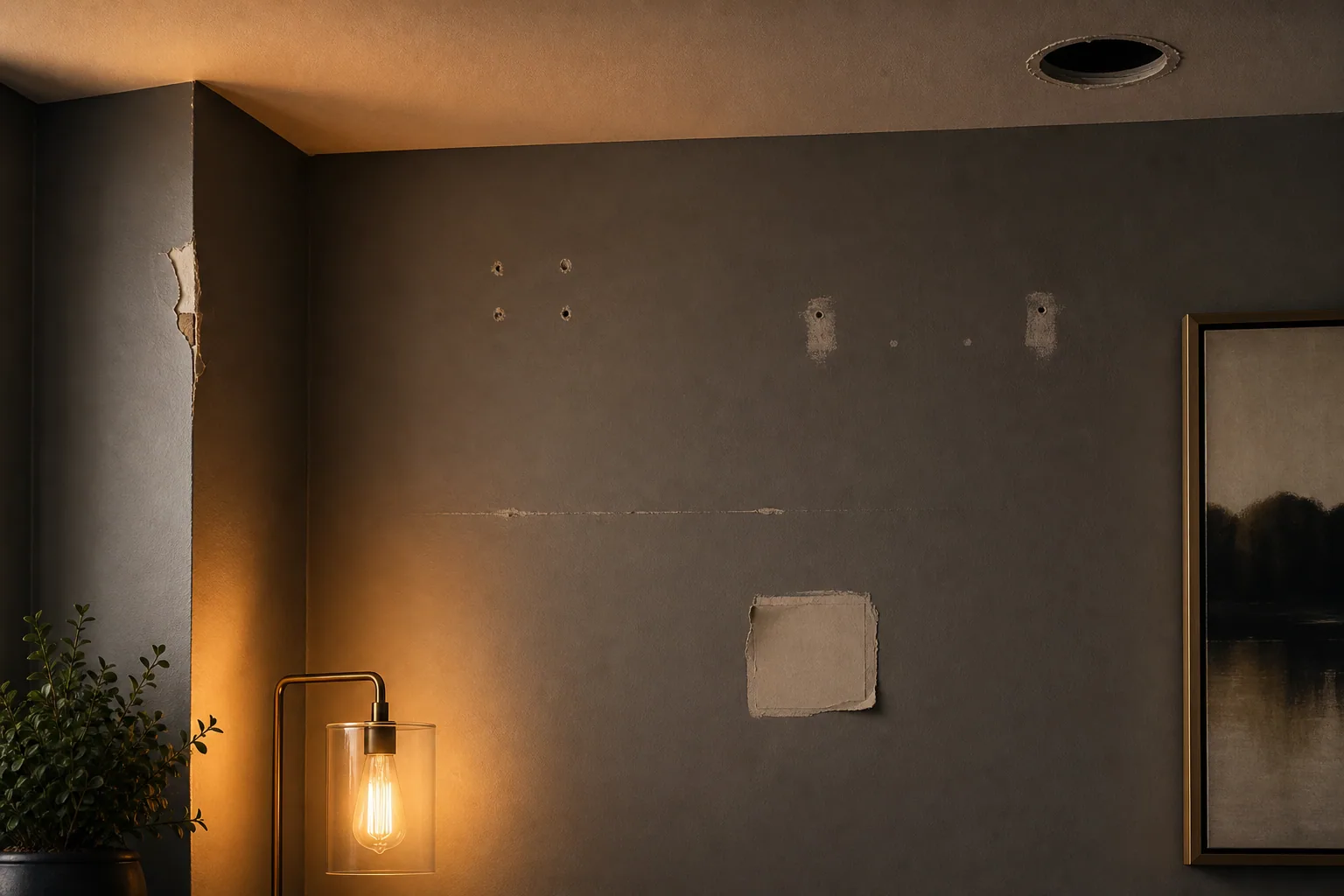
Small holes, dents, and anchor damage
Impact dents, nail holes, stripped anchors, and small punctures should be shown with their dimensions and the surrounding surface. Clustered damage may affect a wider area than each individual mark suggests.
Removed mounts and shelving
Television brackets, shelves, hooks, and other mounted items can leave fastener holes, torn paper, compressed drywall, paint outlines, or damage near studs and trim.
Cracks, separated tape, and reopened seams
Cracks and visible seams may involve loose tape, movement, or an earlier repair that has reopened. Include photos showing the full length of the condition and nearby transitions.
Failed patches and repair buildup
Raised edges, visible mesh, uneven compound, cracking filler, and repeated patch layers can affect how much of the previous repair needs to be considered.
Outside corners and corner bead
Chipped corners, separated compound, dents, and exposed or shifted corner bead should be documented from multiple angles with the adjoining walls and baseboard or casing.
Ceiling openings and localized damage
Small fixture openings, access cuts, anchor damage, and isolated ceiling patches should be shown with their size, ceiling height, nearby fixtures, texture, and any visible staining or movement.
Not every crack or reopened seam has the same cause, and photos alone may not reveal the complete backing or surface condition.
Send wide photos, close-ups, rough measurements, texture details, nearby trim or fixture context, and any information about previous repairs so HammerNest can review the practical scope.
How it works
How the drywall repair request works.
A simple flow from wall photos and measurements to practical follow-up.
- Send repair detailsShare photos, location, urgency, and the best way to reach you.
- Upload photos if helpfulWide and close-up photos make the first review clearer.
- Choose call or text follow-upTell us how you prefer to handle the next step.
- Get the next stepIf the job fits, timing, materials, and the repair plan are confirmed.


Drywall request details
What to send with a drywall repair request
A clear set of phone photos and a few basic details help HammerNest understand the damaged area, surrounding finishes, access conditions, and expected level of preparation. For one or two repair areas, the request can remain simple and focused.
Show the complete wall or ceiling
Send one wide photo showing the entire wall or ceiling area around the damage. Include nearby corners, floors, trim, doors, cabinets, shelving, and fixtures for scale and context.
Add clear damage close-ups
Photograph the hole, crack, failed patch, damaged corner, or mounting point from more than one angle. Show torn paper, raised edges, separated tape, exposed anchors, staining, or previous repair materials.
Include rough measurements
Provide the approximate width and height of each damaged area. Note the ceiling height or distance from nearby trim, outlets, switches, cabinets, and other fixed features when relevant.
Describe the condition and finish
Briefly explain how the damage occurred and whether it has changed, reopened, or spread. Note the existing texture and whether the request involves patching only, paint-ready preparation, or a broader finish discussion.
Explain access and preferred timing
Mention furniture, appliances, stairs, pets, stored belongings, occupied rooms, and anything blocking the wall or ceiling. Preferred timing can be shared as planning context rather than a confirmed appointment.
Phone photos are enough for the initial review when they show the complete repair area, close damage details, surrounding fixtures and finishes, approximate size, and access limitations. Photos help define the request but do not confirm the final scope.
Share wide photos, close-ups, measurements, damage history, texture and finish expectations, access notes, and preferred timing so HammerNest can review the practical next step.
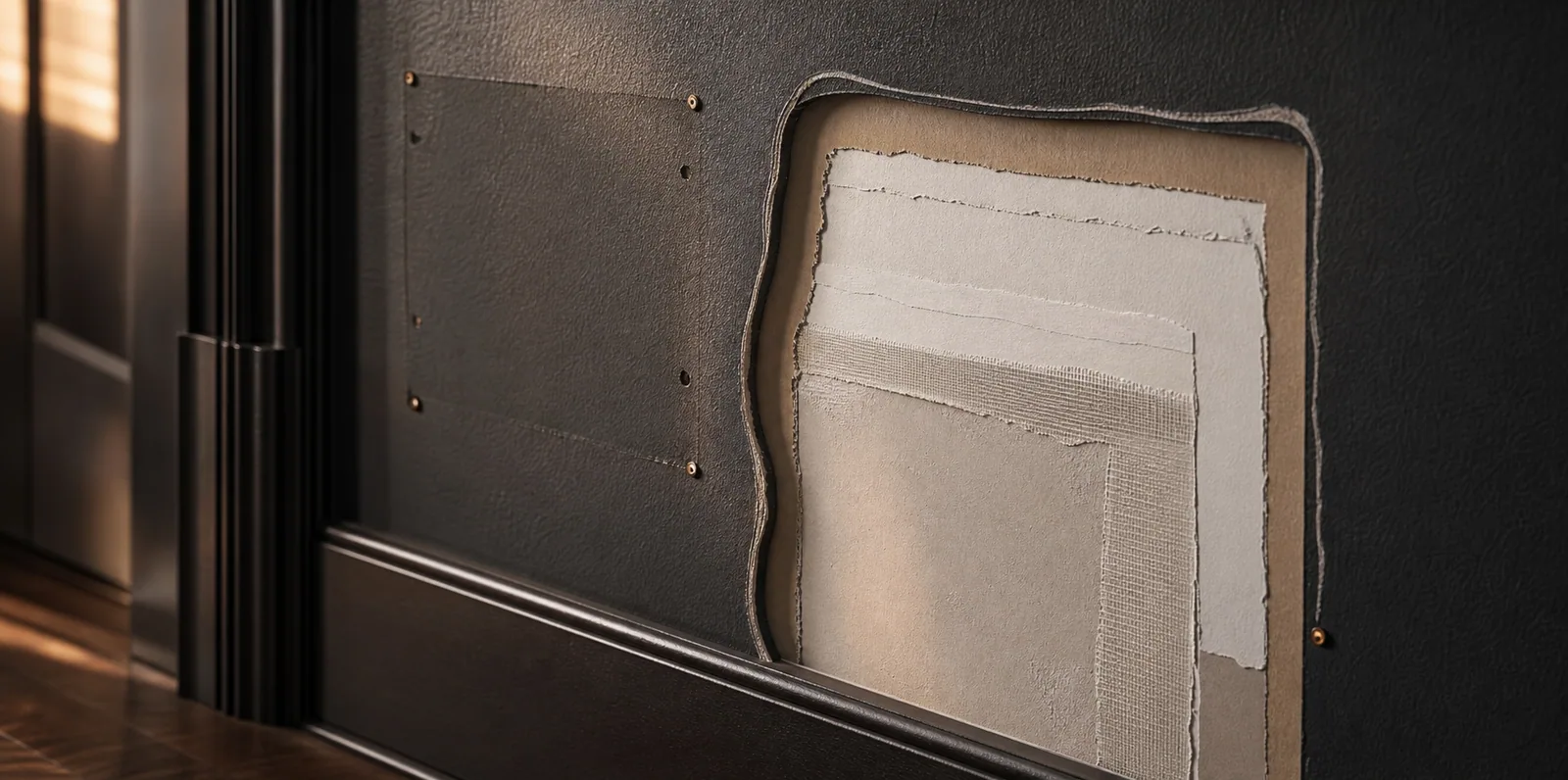
Surrounding wall conditions
The surrounding wall can matter as much as the visible damage
A visible hole, crack, or failed patch may represent only the most obvious part of the repair area. Earlier compound, filler, tape, anchors, adhesives, and finish changes can affect the surrounding surface even when broader weakness is not immediately visible.
The initial opening does not always define the complete scope. Photos showing nearby trim, fixtures, material transitions, staining, softness, and previous work help HammerNest review whether the repair remains localized or requires a wider surface discussion.
Layered compound and filler
Multiple layers of joint compound, spackle, or filler can create raised edges, uneven thickness, and a wider transition around the visible patch.
Loose tape and repeated cracking
A crack may follow loose joint tape or an earlier seam repair that has reopened. Show the full crack length and any repeated separation around the prior patch.
Anchors, fasteners, and backing
Stripped anchors, enlarged mounting holes, and missing or damaged backing can affect how much surrounding drywall must be considered after shelving or wall-mounted items are removed.
Mixed materials and thicknesses
Older plaster may meet newer drywall, and replacement panels may differ in thickness from the original surface. These transitions can affect alignment, finish buildup, and material matching.
Nearby trim and fixed finishes
Damage close to casing, baseboards, cabinets, tile, built-ins, outlets, or switches may require a more precise review because the repair area cannot be considered independently from those fixed edges.
Adhesive, staining, and prior repair areas
Wallpaper residue, old adhesive, wall-mount outlines, softness, staining, or repeated cracking around a previous patch may indicate that the surrounding surface needs closer review without confirming hidden damage in advance.
Earlier work can sometimes conceal a larger weak area, but the complete condition may not be clear until the surrounding surface and prior repair materials are reviewed.
Send wide photos, close-ups, material transitions, nearby trim or fixtures, previous repair details, and any visible staining, softness, or repeated cracking so HammerNest can review the practical scope.
Finish and paint-ready expectations
Define the finish expectation before the repair is reviewed
Drywall repair can involve different finish expectations, from stabilizing and filling a damaged area to creating a sanded surface suitable for later painting. The existing wall condition, texture, nearby finishes, and amount of prior repair buildup all affect how the completed area may appear.
Clarify whether the request is limited to the repaired section or should include a wider wall discussion. Paint-ready describes surface preparation and does not automatically include painting, exact color matching, texture matching, or an invisible finish unless those items are specifically included in the reviewed scope.
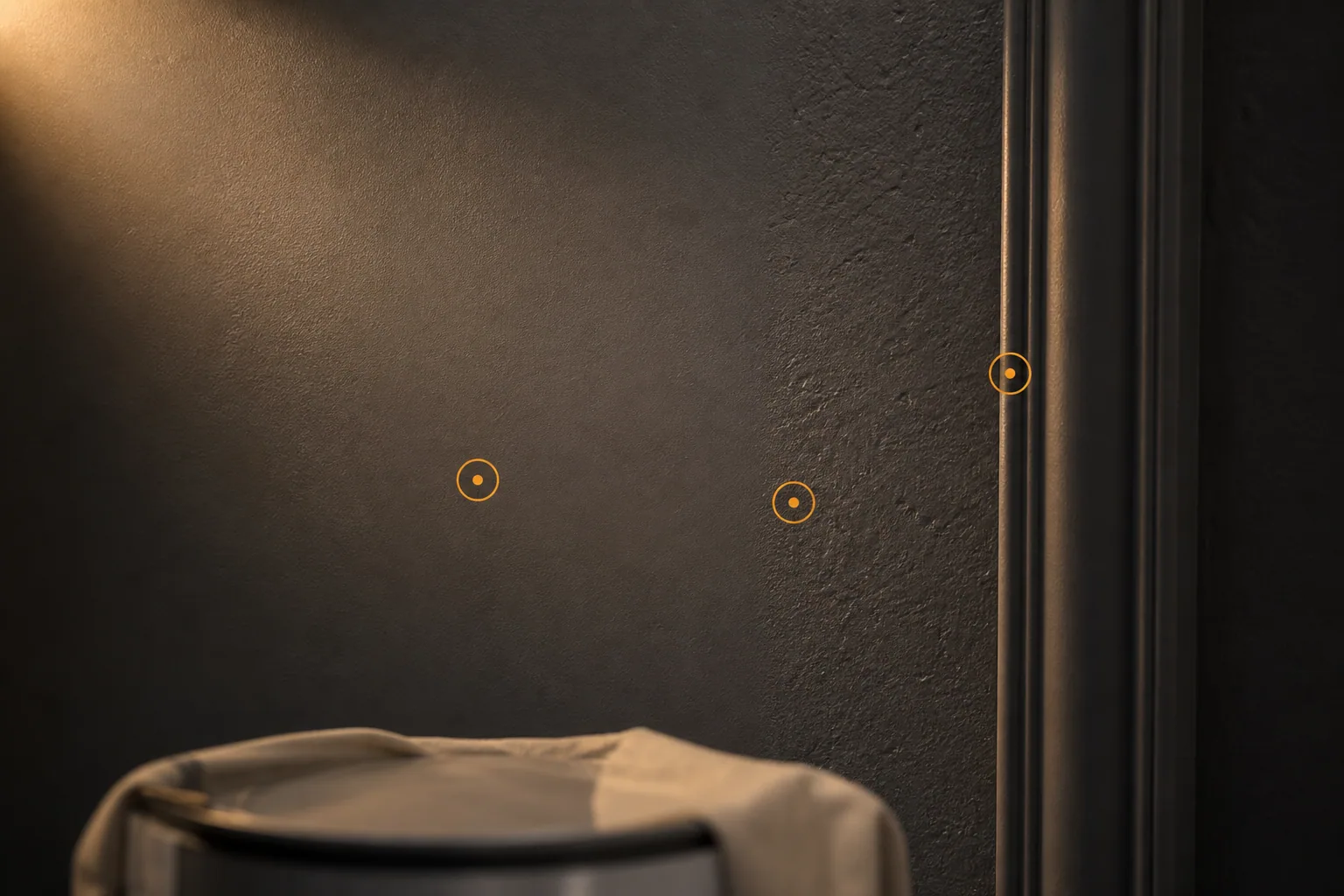
Stabilized and filled repair area
Some requests focus on closing the opening, addressing loose material, and filling the damaged area without extending the scope to broader surface refinishing or painting.
Sanded paint-ready preparation
Paint-ready preparation generally means the repaired area is filled and sanded for later coating. The final appearance can still depend on primer, paint application, surrounding texture, and lighting.
Smooth walls and existing texture
A smooth wall differs from orange peel, knockdown, rolled texture, or earlier hand-applied finishes. Existing texture and patch buildup may limit how closely a localized repair blends with the surrounding area.
Trim, cabinets, tile, and wallpaper
Repairs near painted casing, cabinets, tile, countertops, built-ins, or wallpaper require careful scope review because those fixed finishes can limit how widely the wall surface can be prepared.
Paint matching and wider wall sections
Owner-supplied paint can be included in the request, but aged paint may have faded or changed over time. In some cases, discussing a wider wall section may be more practical than preparing only the immediate patch.
Previous texture, compound buildup, and surface variation may remain perceptible under certain lighting even after careful localized preparation.
Share photos of the complete wall, existing texture, nearby trim or fixed finishes, paint information, and whether the request is for patching, paint-ready preparation, or a wider finish discussion.
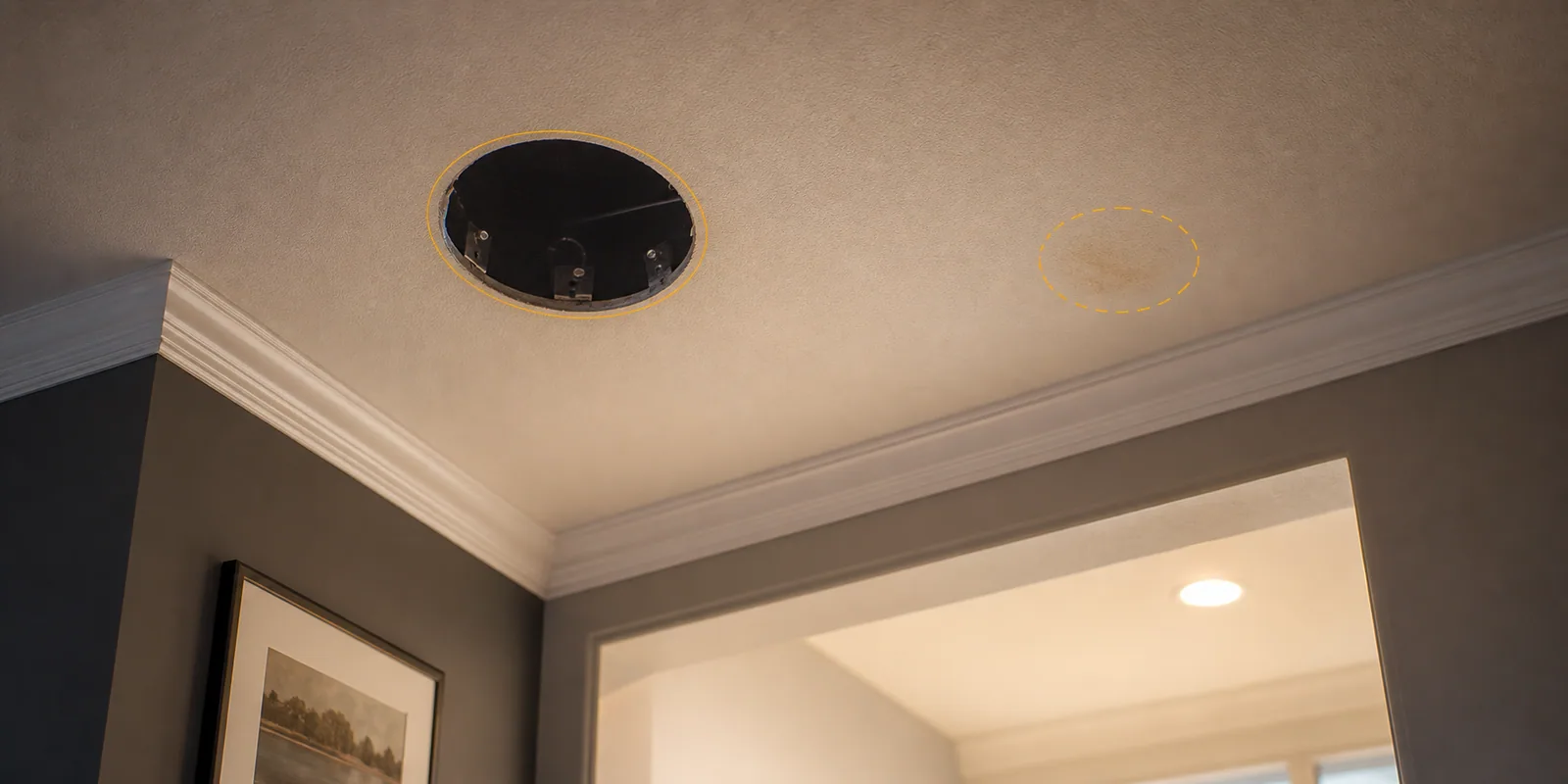
Ceiling damage and scope boundaries
Some wall and ceiling conditions need a broader review
Localized ceiling openings may remain after removed fixtures, access work, anchors, or isolated damage. These areas should be shown with the surrounding ceiling, nearby fixtures, room access, ceiling height, and any visible staining, cracking, softness, or movement.
Drywall should not simply conceal an unresolved source condition. Active moisture, electrical concerns, structural movement, extensive material damage, or specialty finishes may need to be addressed before a localized wall or ceiling repair can be defined.
Active leaks and persistent moisture
Active roof or plumbing leaks, recurring ceiling or wall moisture, and unresolved staining should be corrected at the source before the drywall area is closed or refinished.
Mold concerns and widespread staining
Mold concerns, broad discoloration, repeated dampness, or staining that extends beyond the visible opening may require a separate assessment before localized drywall work is reviewed.
Soft, sagging, or extensive damage
Soft surfaces, sagging ceiling material, widespread deterioration, and damage extending across a large area fall outside a focused patch request and may require broader replacement planning.
Wiring and fixture concerns
Openings containing electrical wiring, damaged boxes, unsupported components, or unresolved fixture concerns may need another provider before the surrounding drywall scope can be established.
Movement and larger replacement needs
Structural movement, repeated major cracking, large ceiling replacement, and full-room drywall replacement require a broader review than an isolated wall or ceiling repair.
Fixed finishes and specialty systems
Damage extending behind cabinets, tile, built-ins, or other fixed finishes can expand the scope. Specialty plaster, decorative finishes, and commercial wall systems may also require a different provider.
Photos can help identify visible warning signs, but they may not confirm the full source or extent of the condition behind the wall or ceiling.
Send wide photos, close-ups, dimensions, fixture context, access details, and any visible moisture, staining, softness, sagging, or repeated cracking so HammerNest can review whether the request fits localized drywall work.
Short drywall and maintenance lists
One wall repair or several small items can be reviewed together
Freeport homeowners and property managers can submit one focused drywall repair or a short list of related maintenance items from the same property. Ordinary wall damage discovered after belongings are removed, before another occupant arrives, or during regular maintenance can be included, but each item still needs separate photos, dimensions, surface details, and access notes.
Drywall hole and shelving anchors
A drywall hole can be submitted with stripped anchors, brackets, paint outlines, and other marks left after shelving hardware is removed.
Failed patch and baseboard damage
A raised or cracked patch can be reviewed with nearby chipped, loose, or separated baseboard when both conditions and the connecting wall surface are photographed clearly.
Wall-mount marks and loose trim
Television-mount or fixture-removal marks can be grouped with loose casing or trim, but each mounting point, fastener area, and finish condition should be documented separately.
Ceiling opening and wall damage
A small ceiling opening can be included with localized wall damage in the same room when the opening dimensions, ceiling height, nearby fixtures, and wall condition are shown.
Cabinet and garage wall details
A cabinet-side wall repair can be submitted with failed sink caulk when any moisture or swelling is documented. Garage shelving removal and a nearby drywall opening can also be grouped with mounting-area photos and measurements.
Submitting several items together does not guarantee one repair method, fixed price, appointment, or completion schedule.
Share separate photos, dimensions, surface conditions, finish expectations, access details, and occupancy context for each item so HammerNest can review the complete request.
Estimate factors and scope boundaries
What affects a drywall repair estimate in Freeport
A Freeport drywall repair estimate depends on the amount and type of damage, where it is located, the surrounding surface, the expected finish, and how easily the area can be reached. Previous patches, moisture, loose materials, and missing backing can also make a localized-looking repair more involved.
Drywall repair requests may also connect with HammerNest service coverage around Winnebago, Pecatonica, Lena, and other locations listed on the broader service-area page. Route suitability depends on the actual address, repair scope, property access, and schedule rather than automatic coverage or guaranteed availability.
Damage
The number, width, height, depth, and type of holes, dents, cracks, seams, or ceiling openings help define the request. Several clustered marks may involve a wider surface than one isolated opening.
Location
Repairs on walls, ceilings, stairwells, basement or garage surfaces, outside corners, and areas near trim, cabinets, tile, or other fixed finishes can involve different access and preparation needs.
Surface
Drywall, plaster, existing texture, layered paint, wallpaper residue, and previous patches respond differently to localized preparation. Mixed materials and uneven buildup may affect the practical scope.
Finish expectation
Basic localized repair, sanded paint-ready preparation, texture discussion, and broader surface work are different scope expectations. Painting, exact color matching, and an invisible finish are not automatically included.
Access
Furniture, appliances, ceiling height, stairs, occupied rooms, pets, stored items, and blocked wall areas can affect how the damage is reached, photographed, and reviewed.
Existing conditions
Moisture, loose tape, softness, repeated cracking, failed patches, and missing backing may indicate that the visible opening does not define the complete repair area.
HammerNest does not promise fixed drywall repair pricing, travel fees, guaranteed availability, or automatic coverage from a page visit alone.
Share the damage dimensions, location, wall or ceiling surface, finish expectations, access details, and existing conditions so HammerNest can review which items fit localized drywall repair.
Project boundaries
Some drywall repair requests should be separated before follow-up
Some wall and ceiling conditions involve utility, moisture, structural, specialty, or larger replacement concerns that should be separated from localized handyman drywall review.
Localized drywall repair can still be submitted when broader concerns are flagged clearly and the photos show the damage, surrounding surfaces, access, and finish expectations.
Work outside localized drywall review
Active leaks and mold concerns
Active roof or plumbing leaks, recurring moisture, mold concerns, and widespread staining may need another provider or prior correction.
Structural or movement concerns
Structural movement, repeated major cracking, sagging ceiling material, and extensive wall or ceiling deterioration require broader review.
Electrical or fixture conditions
Unresolved electrical wiring, fixture-box concerns, or unsupported components inside an opening should be separated before drywall scope is defined.
Large replacement needs
Full-room drywall replacement, large ceiling replacement, or damage behind fixed cabinets, tile, or built-ins can extend beyond localized repair.
Specialty finishes
Specialty plaster, decorative finishes, commercial wall systems, and unusual textures may require a different provider or a broader finish plan.
Finish expectations
Painting, exact color matching, invisible repair results, and wide-wall refinishing should be clearly separated from paint-ready preparation.
The remaining localized drywall concerns can still be reviewed when source conditions, specialty work, and broader finish expectations are identified separately.
Share localized drywall damage plus any moisture, electrical, movement, specialty, or larger-scope concerns separately.
Service hub
Related wall, finish, and repair paths.
These pages may fit drywall repair requests, removed hardware damage, trim concerns, short maintenance lists, and broader home-repair context.
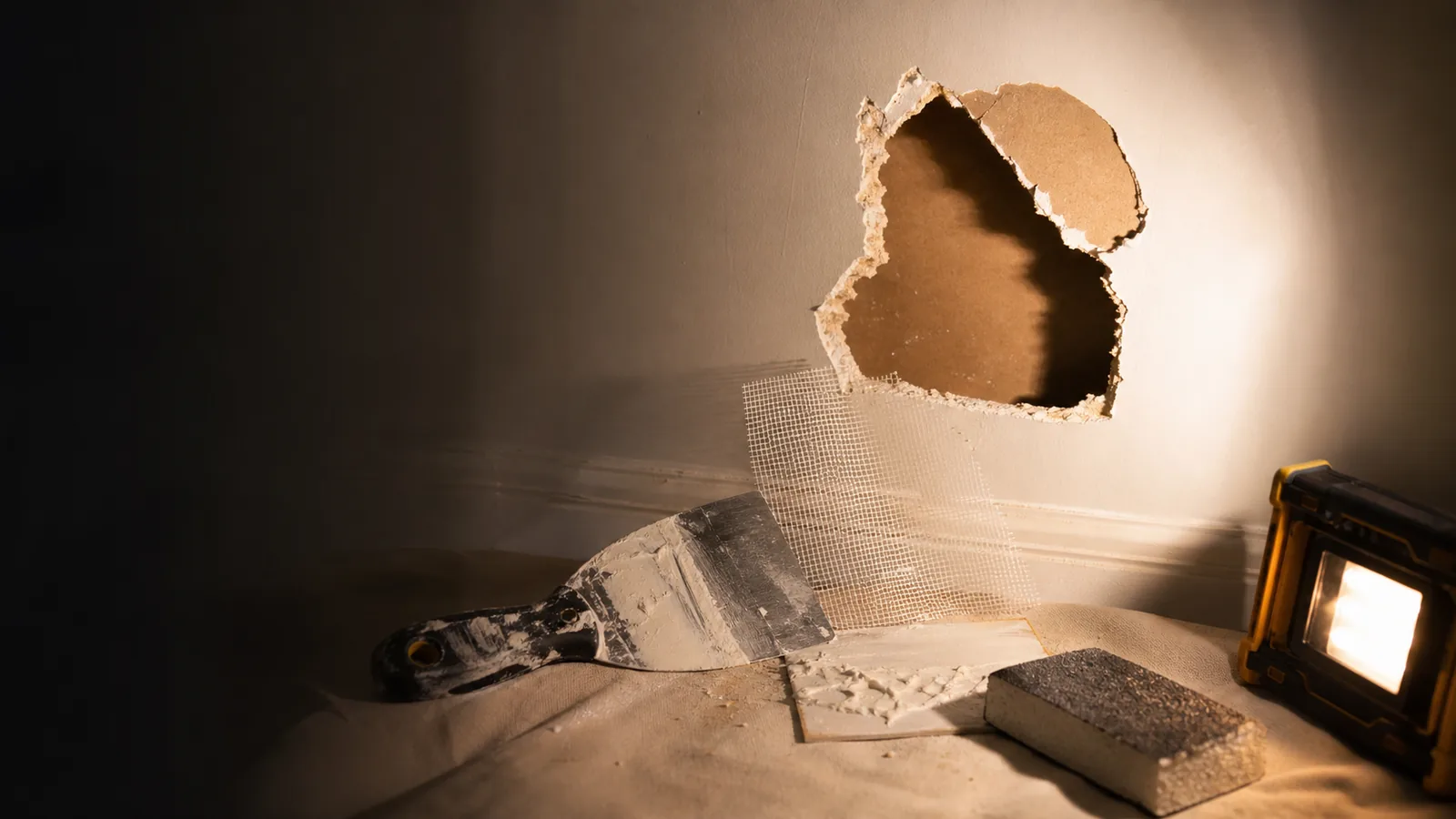 Fix a Hole in DrywallNeed a drywall hole repaired near Freeport? Send wide and close-up photos so HammerNest can review patch size, texture, and next steps.View Service ->
 Trim and Molding RepairNeed trim and molding repair in Freeport, IL? HammerNest reviews photos, scope, materials, and timing for practical handyman help nearby.View Service ->
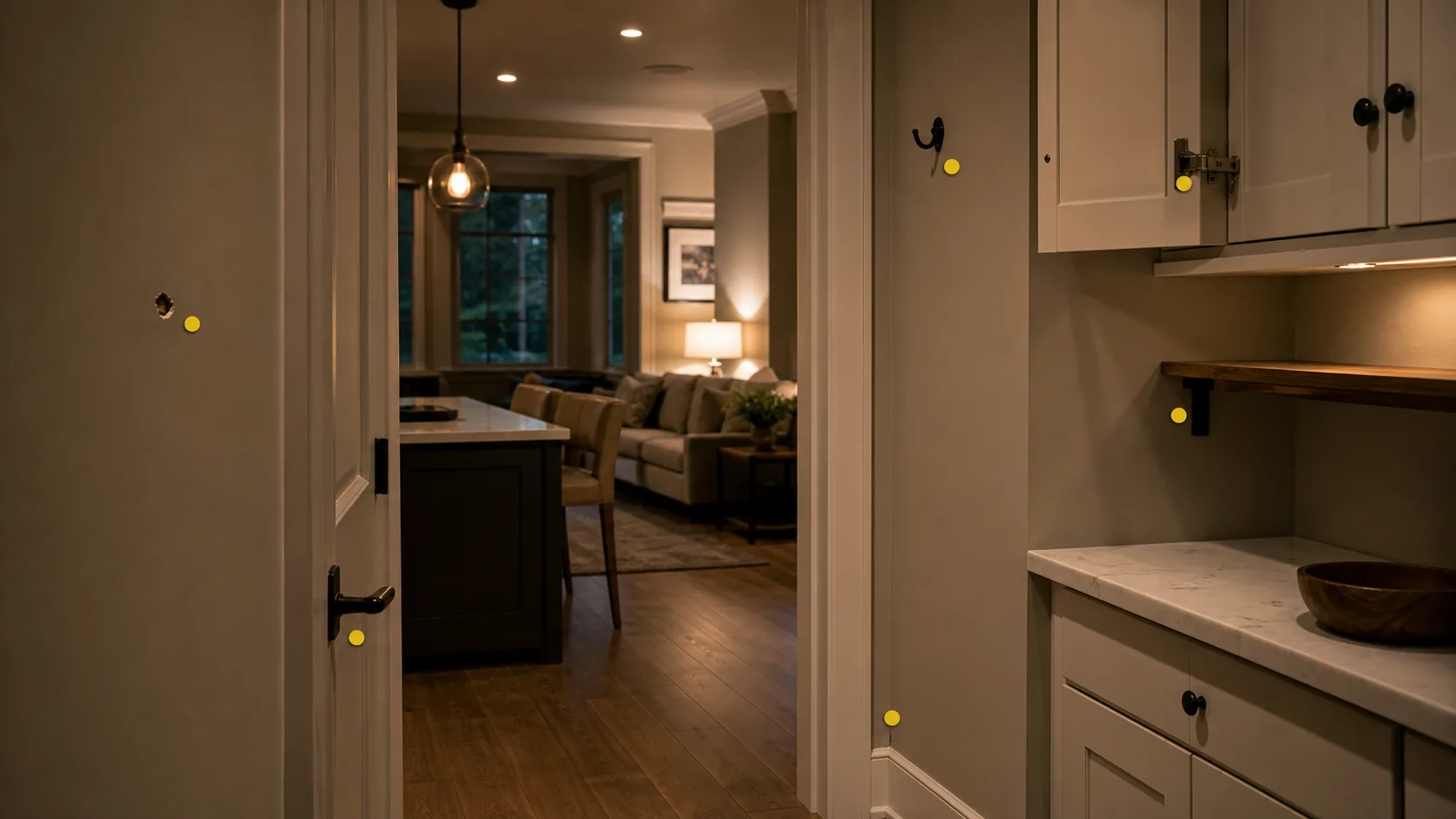 Punch List RepairsNeed punch list repairs in Freeport, IL? HammerNest reviews photos, scope, materials, and timing for practical handyman help nearby.View Service ->
 Request EstimateSend photos, timing, property details, and repair notes so HammerNest can review your handyman request before the next step.View Service ->


 Not sure if we cover your area?


