
Flooring Repair
HammerNest helps homeowners around Freeport, IL review localized flooring repair requests for loose transitions, lifted planks, minor tile edges, squeaks, thresholds, and unfinished floor details.
Fast response. Quality work. Fair pricing.
Localized floor repair
Flooring repair for common localized problems in Freeport, IL
HammerNest reviews localized flooring repair problems in Freeport, IL, including loose transitions, lifted plank edges, minor tile or grout-edge damage, unfinished floor edges, shifting thresholds, and small areas that squeak or move underfoot.
The visible damage is only part of the request. Flooring type, surrounding material, moisture history, replacement availability, and the condition below the surface should be reviewed together before deciding whether the issue fits a focused handyman repair.
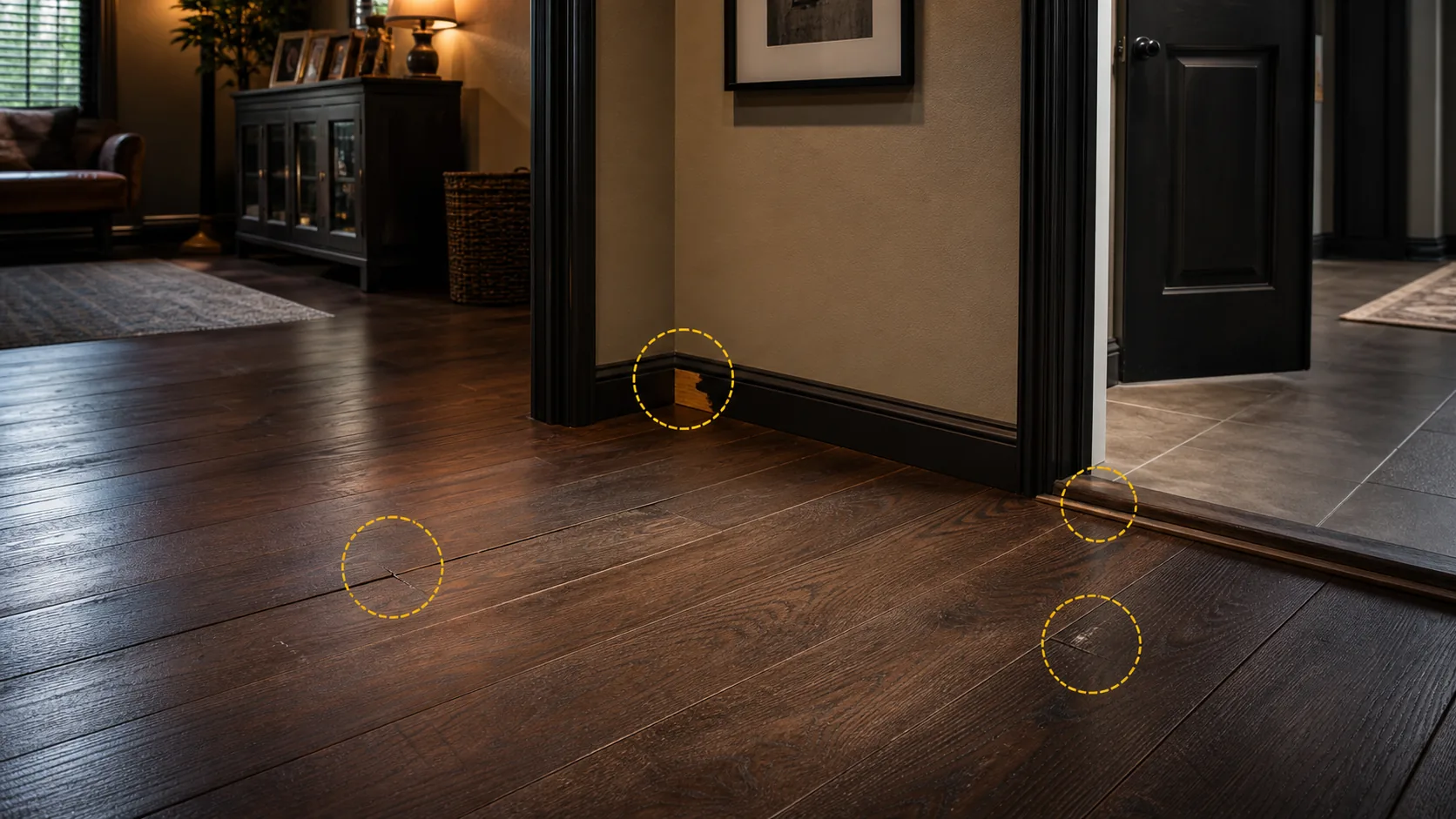
Loose transitions and thresholds
Loose, raised, bent, or missing transition pieces can create movement where two rooms or flooring materials meet. Include both floor surfaces and the full doorway in the project photos.
Lifted or separated planks
Laminate, luxury vinyl plank, engineered wood, and other plank flooring can lift, shift, or separate at the seams. The affected plank and the surrounding floor should be reviewed as one connected area.
Tile and grout-edge damage
Chipped tile edges, loose edge pieces, or cracking near a threshold may involve the tile, grout, transition, or surface below. Broad cracking across several tiles may require a different plan.
Squeaks and localized movement
A squeak or small area of flex may begin in the finished flooring, fasteners, subfloor, or support underneath. Note exactly where the sound or movement occurs during normal use.
Unfinished edges and small gaps
Exposed flooring edges near walls, cabinets, doorways, or completed renovation work may need trim, molding, or a compatible transition rather than flooring material alone.
If several rooms, transitions, planks, tiles, or trim edges need attention, send the complete flooring repair list in one request.
Share photos of the complete area, close-up damage, flooring details, and any leftover matching material so HammerNest can review the practical next step.
Project intake checklist
What to send with your flooring repair request
Clear photos and a few basic details help show the flooring type, damaged area, surrounding conditions, and whether the problem appears limited to the surface or may involve movement below it.
Full area photos
Take one wide photo showing the complete room, doorway, hallway, or flooring run around the damaged area. Include nearby walls, cabinets, appliances, trim, thresholds, and furniture that may affect access.
Low-angle damage views
Photograph lifted edges, uneven seams, loose transitions, chipped tile, gaps, or height differences from floor level so movement or separation is easier to see.
Measurements and quantity
Provide the approximate length and width of the damaged area and count the affected planks, tiles, transitions, thresholds, or rooms.
Flooring and replacement details
Note the material type and send product links, packaging, manufacturer details, or photos of leftover matching planks, tiles, trim, or transition pieces when available.
Movement and recent changes
Describe whether the area squeaks, flexes, shifts, catches underfoot, or changed after a leak, appliance move, flooring work, door work, or temperature swing.
Phone photos and rough measurements are enough when they clearly show the full area and the damage up close. Do not remove flooring for photos.
Share wide photos, low-angle views, measurements, material information, movement details, and any leftover matching product.
How it works
How a flooring repair request is reviewed.
A simple repair flow from room photos to practical follow-up.
- Send repair detailsShare photos, location, urgency, and the best way to reach you.
- Upload photos if helpfulWide and close-up photos make the first review clearer.
- Choose call or text follow-upTell us how you prefer to handle the next step.
- Get the next stepIf the job fits, timing, materials, and the repair plan are confirmed.


Transition and threshold check
Floor transitions and thresholds should be reviewed with both surfaces
A loose transition strip or shifting threshold may involve more than the visible piece. The materials on both sides, floor-height difference, edge condition, fastening points, and surrounding movement should be reviewed together.
Doorways, room changes, exterior entries, closets, and finished renovation edges are common trouble spots. A transition that lifts, rocks, catches underfoot, or interferes with a door may need a different approach than a simple missing trim piece.
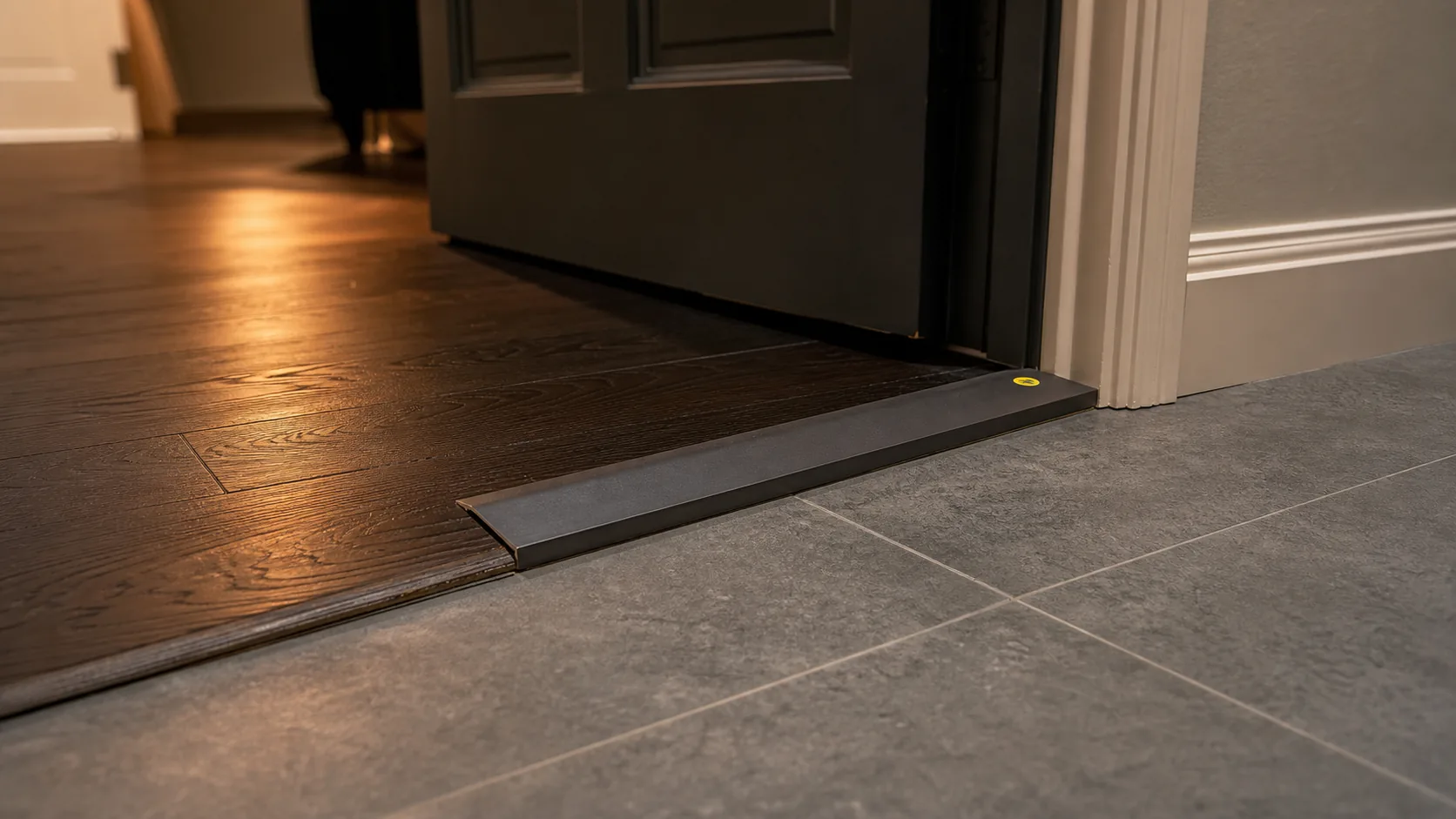
Transition strips
Loose, bent, cracked, or missing transition strips can affect the joint between two flooring materials. Show the full doorway and both adjoining floor surfaces.
Thresholds
Thresholds at exterior doors, bathrooms, closets, and interior openings should be reviewed with the frame, floor edge, fasteners, and nearby trim.
Floor-height changes
Tile, carpet, plank flooring, and sheet flooring may sit at different heights. The transition profile should account for the actual height change.
Edge condition
Broken plank ends, chipped tile, frayed carpet, failed adhesive, or unfinished subfloor can prevent a new transition from sitting correctly.
Door clearance
Raised transitions and thresholds can interfere with door swings, closet doors, or normal foot traffic. Include photos showing the door open and closed when useful.
A loose strip may be the visible symptom of movement in the flooring beneath it. Mention whether either floor surface shifts, flexes, separates, or changes height near the transition.
Send wide doorway photos, low-angle views, rough measurements, material details, and a short description of any movement or door-clearance problem.
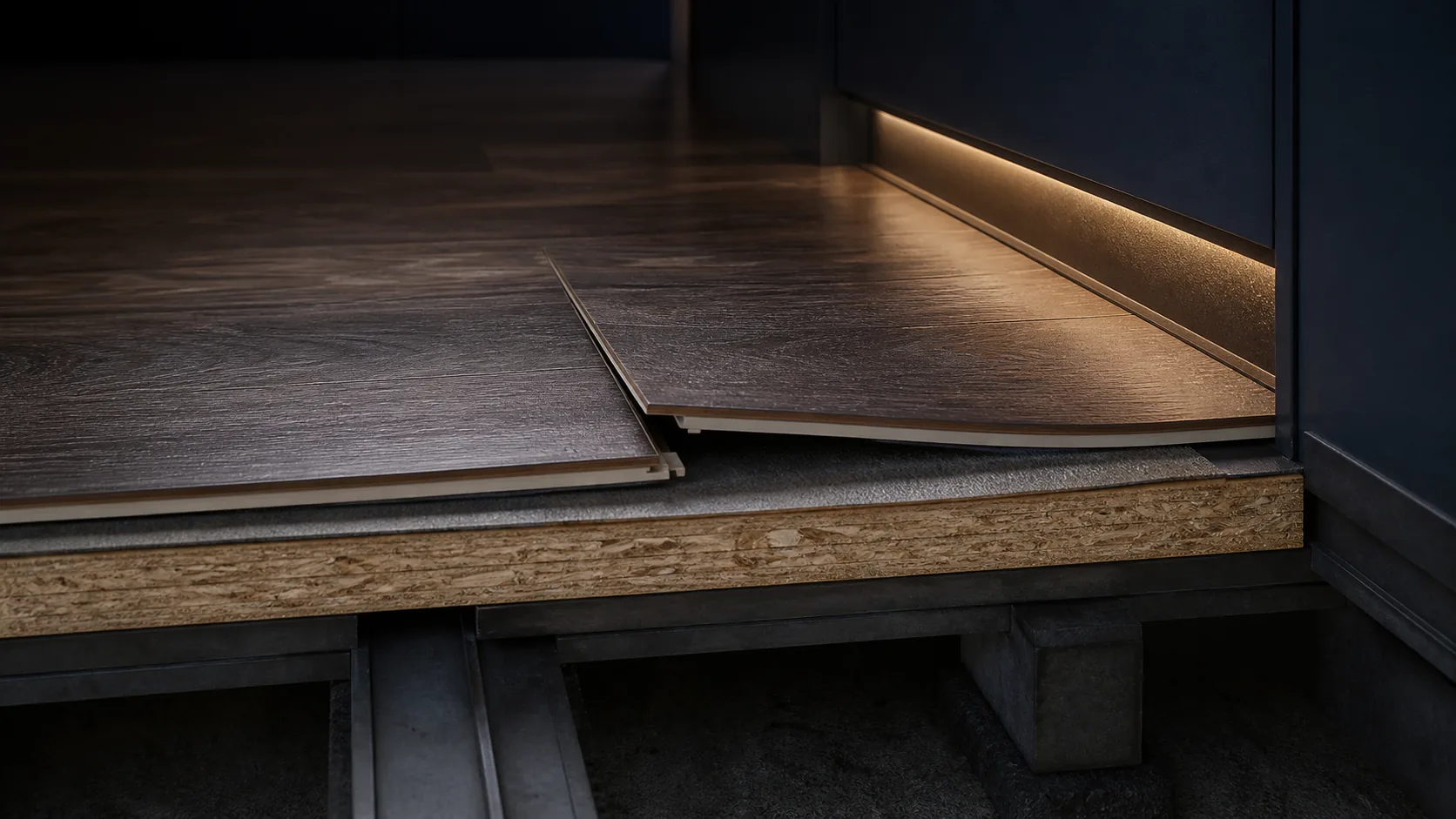
Plank movement check
Lifted or moving planks may involve more than the visible edge
A lifted corner, separated seam, or plank that shifts underfoot may involve the board connection, surrounding flooring, moisture exposure, or the surface below. The full affected area should be reviewed before one visible edge is treated as the only problem.
Floating click-lock flooring, glue-down products, laminate, luxury vinyl plank, and engineered wood use different installation systems. Identifying the material and how it moves helps clarify whether the request looks localized or may extend across a larger section.
Lifted corners
A raised corner or edge can catch underfoot and may involve swelling, a damaged connection, or movement in the surrounding planks.
Separated seams
Gaps between planks may result from movement, damaged locking edges, product expansion, or shifting across the floor run.
Flooring system
Floating, click-lock, and glue-down floors do not respond to movement in the same way. Product information or leftover material can help identify the connection involved.
Moisture and surface below
Leaks, dampness, swelling, unevenness, or deterioration beneath the flooring can cause the finished surface to lift or move.
Material matching
Replacement planks should be compared for width, thickness, edge profile, locking system, color, grain, and finish.
Do not lift or remove additional planks for photos. Show the complete floor run, affected seams, nearby walls or cabinets, and any leftover matching product.
Send wide photos, low-angle views, movement details, flooring information, and any matching material.
Tile and grout-edge check
Small tile and grout-edge issues should be checked with the surrounding floor
A chipped tile edge, loose corner, or cracked grout line may involve more than the visible surface. The adjoining tiles, transition, floor movement, and material beneath the damaged area should be reviewed together.
Localized damage near doorways, cabinets, room edges, and flooring transitions may fit a focused repair request. Repeated cracking, rocking tiles, or movement across a wider area can point to a broader flooring condition.
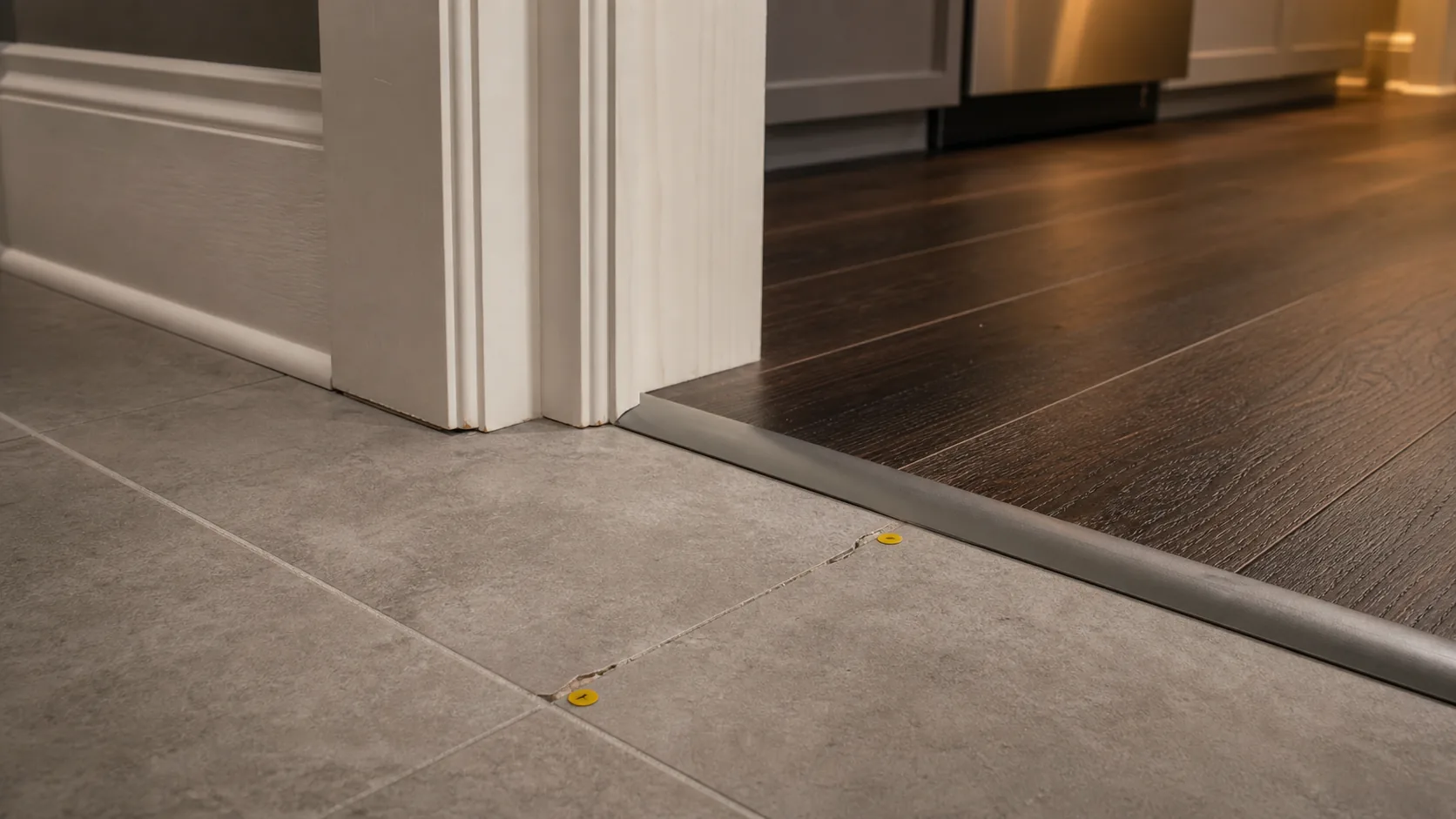
Tile condition
Chips, cracks, loose corners, and damaged edges should be photographed from above and at floor level with the surrounding pieces visible.
Grout edges
Cracked, missing, or separating grout near thresholds, walls, cabinets, or another flooring material may result from movement at the joint or below the tile.
Movement
A tile that rocks, shifts, sounds hollow, or changes position under normal use may involve the bond or support below it.
Material matching
Replacement tile should be compared for dimensions, thickness, color, texture, edge profile, and finish.
Surrounding floor
Transitions, adjacent plank flooring, thresholds, trim, and nearby cabinets can affect access and how the repaired area meets the rest of the room.
Broad cracking, repeated grout failure, several loose tiles, or visible movement across a larger section may require review by a flooring or tile specialist.
Send wide room photos, close-up and low-angle views, movement details, rough measurements, and any leftover matching tile.
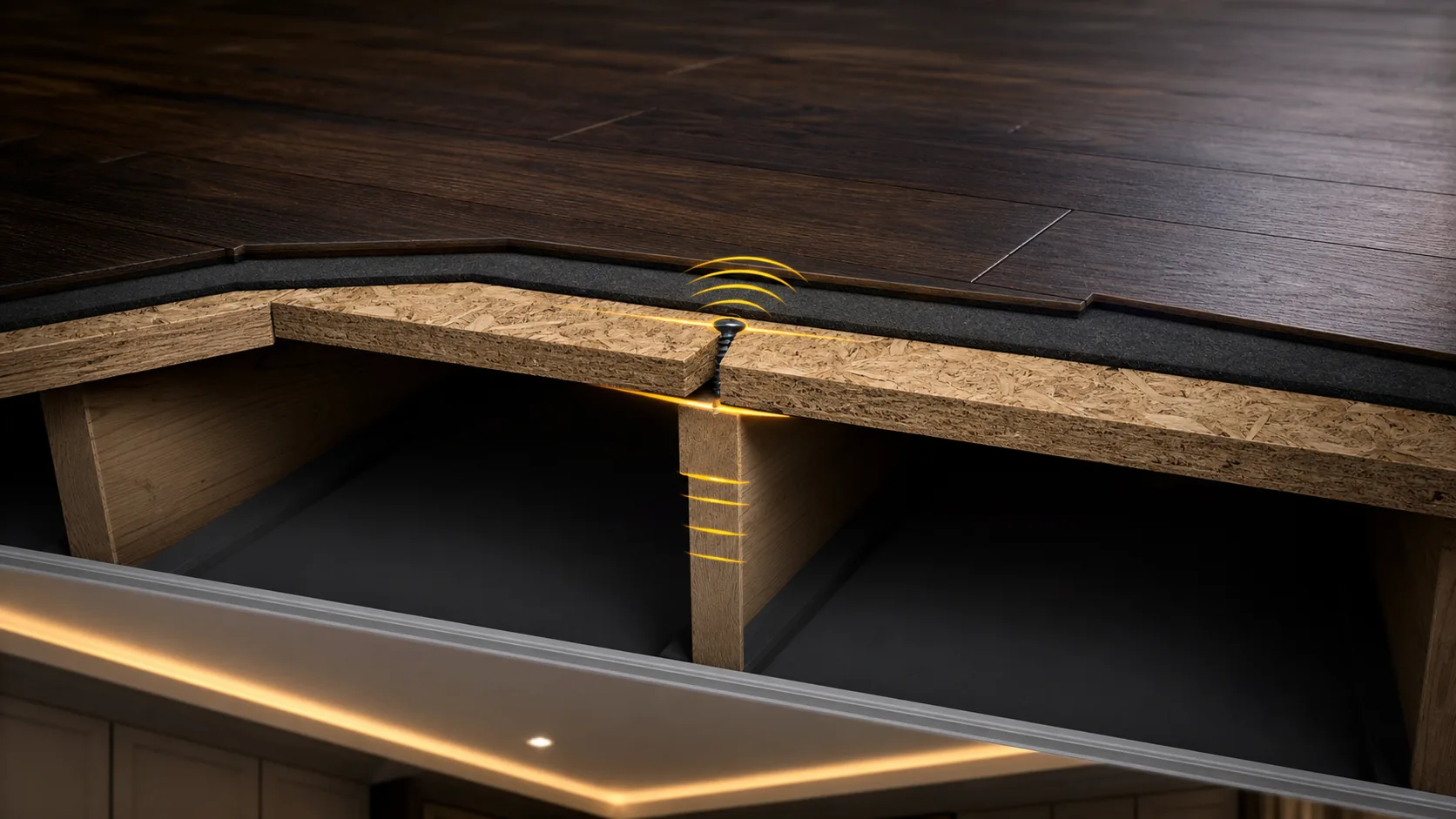
Squeak and movement check
Floor squeaks and movement may begin below the finished flooring
A squeak, flexing spot, or slight change in floor height may come from the finished material, connections beneath it, the subfloor, or support below the surface. The exact location and pattern of movement should be reviewed before assuming the visible flooring is the only issue.
Hardwood, floating plank, tile, carpet, and other floor systems create different access and repair limitations. One isolated noise is different from broad flexing, repeated movement, or an uneven area spanning several feet.
Noise location
Mark the exact spot where the floor squeaks and note whether the sound occurs every time or only under certain steps.
Finished flooring
Identify whether the surface is hardwood, laminate, luxury vinyl plank, engineered wood, tile, carpet, or another material.
Subfloor condition
Movement beneath the finished flooring can show up as flexing, unevenness, recurring gaps, or noise across connected areas.
Support below
Joists, fasteners, and other support beneath the subfloor may affect how the area behaves, but they are not always visible from above.
Access limitations
Carpet, tile, cabinets, finished ceilings, appliances, and furniture can limit access to the source of the movement.
Do not remove flooring or open the ceiling for photos. Broad flexing, softened material, significant unevenness, or movement across a larger area may require a flooring contractor or another appropriate specialist.
Send wide room photos, a marked location, movement details, a short video when helpful, and safe views from below.
Estimate factors
What affects a flooring repair estimate
The scope depends on the flooring material, size of the affected area, matching requirements, condition below the surface, access, and any previous damage or repair work that must be considered first.
Scope
The number and size of affected planks, tiles, transitions, thresholds, or squeaking areas influences how much of the floor needs to be reviewed.
Material
Laminate, luxury vinyl plank, engineered wood, hardwood, tile, and other flooring systems use different profiles, connections, adhesives, and replacement components.
Matching
Replacement material may differ in width, thickness, edge profile, locking system, color, grain, texture, or weathering.
Surface below
Movement, moisture, failed adhesive, damaged underlayment, or unevenness beneath the finished flooring can make a localized surface repair more involved.
Access
Furniture, appliances, cabinets, doorways, closets, baseboards, and occupied rooms can affect how easily the damaged section and surrounding floor can be reached.
Existing conditions
Old fasteners, failed transitions, previous patches, broken edges, loose trim, moisture staining, and connected damage may expand the original request.
Before sending the request, photograph every affected area, provide rough measurements, identify the flooring material, and gather any leftover planks, tiles, transitions, packaging, or product details.
Share the photos, measurements, material details, access conditions, and matching product information so HammerNest can review what the repair may involve.
Project boundaries
When flooring repair may need a broader plan
Some flooring problems extend beyond a localized plank, tile, threshold, or transition repair. Widespread movement, moisture damage, unevenness, or failure across a larger floor area may require a flooring contractor or another appropriate specialist.
Related small repairs can still be submitted with the flooring request so the complete scope can be reviewed together. One list does not mean every item will use the same repair method or automatically fit one appointment.
Flooring work outside a simple localized repair
Full-room installation
Installing a new floor across an entire room, replacing long connected runs, or removing widespread failed flooring is broader than localized handyman repair.
Major leveling or subfloor work
Significant floor leveling, extensive subfloor replacement, or unevenness across a large area may require specialized equipment and a broader flooring plan.
Active leaks and moisture damage
Plumbing leaks, recurring water intrusion, widespread swelling, mold concerns, or persistently damp materials should be resolved before surface flooring repairs proceed.
Structural movement
Broad flexing, major settling, damaged joists, or movement affecting several rooms may need evaluation beyond the finished flooring itself.
Refinishing and restoration
Full hardwood sanding, staining, refinishing, or exact finish restoration is separate from repairing a localized functional problem.
Discontinued materials
Older or discontinued flooring may not have an exact replacement, and a functional patch can remain visible when color, grain, texture, profile, or weathering cannot be matched closely.
Related trim repair, door-clearance adjustments, loose transitions, squeaky-floor concerns, and rental-property turnover items can be included in the same request when each item is photographed separately.
Share wide photos, close-up damage, movement or moisture details, flooring information, and any related small repairs.
Service hub
Related floor and finish help.
These pages may fit the same room, edge, squeak, trim, or property-turnover repair list.
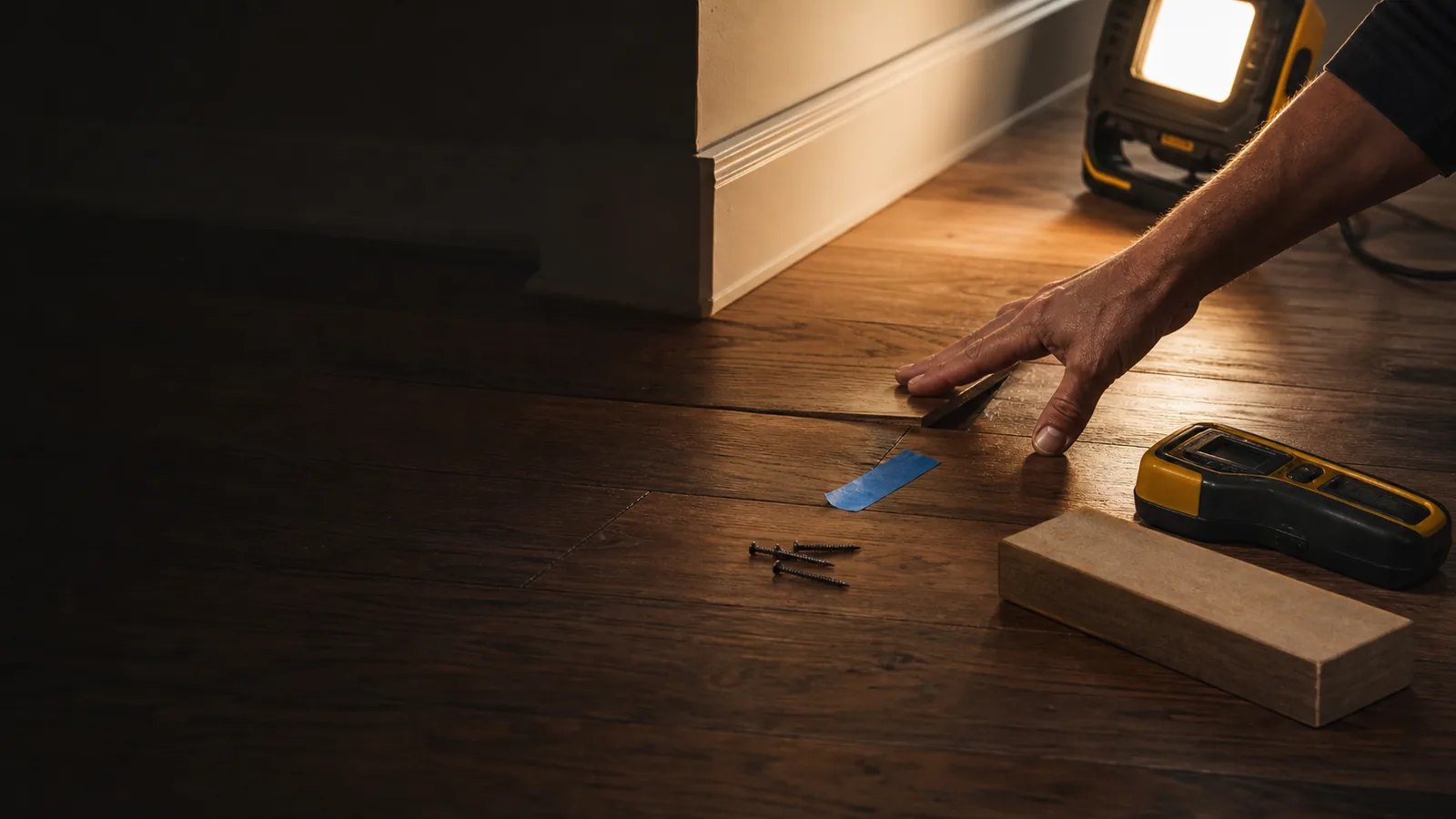 Fix Squeaky FloorsSqueaky floor or loose transition near Freeport? Send photos and notes so HammerNest can review the issue and practical repair options.View Service ->
 Trim and Molding RepairNeed trim and molding repair in Freeport, IL? HammerNest reviews photos, scope, materials, and timing for practical handyman help nearby.View Service ->
 Door RepairNeed door repair in Freeport, IL? HammerNest reviews photos, scope, materials, and timing for practical handyman help nearby.View Service ->
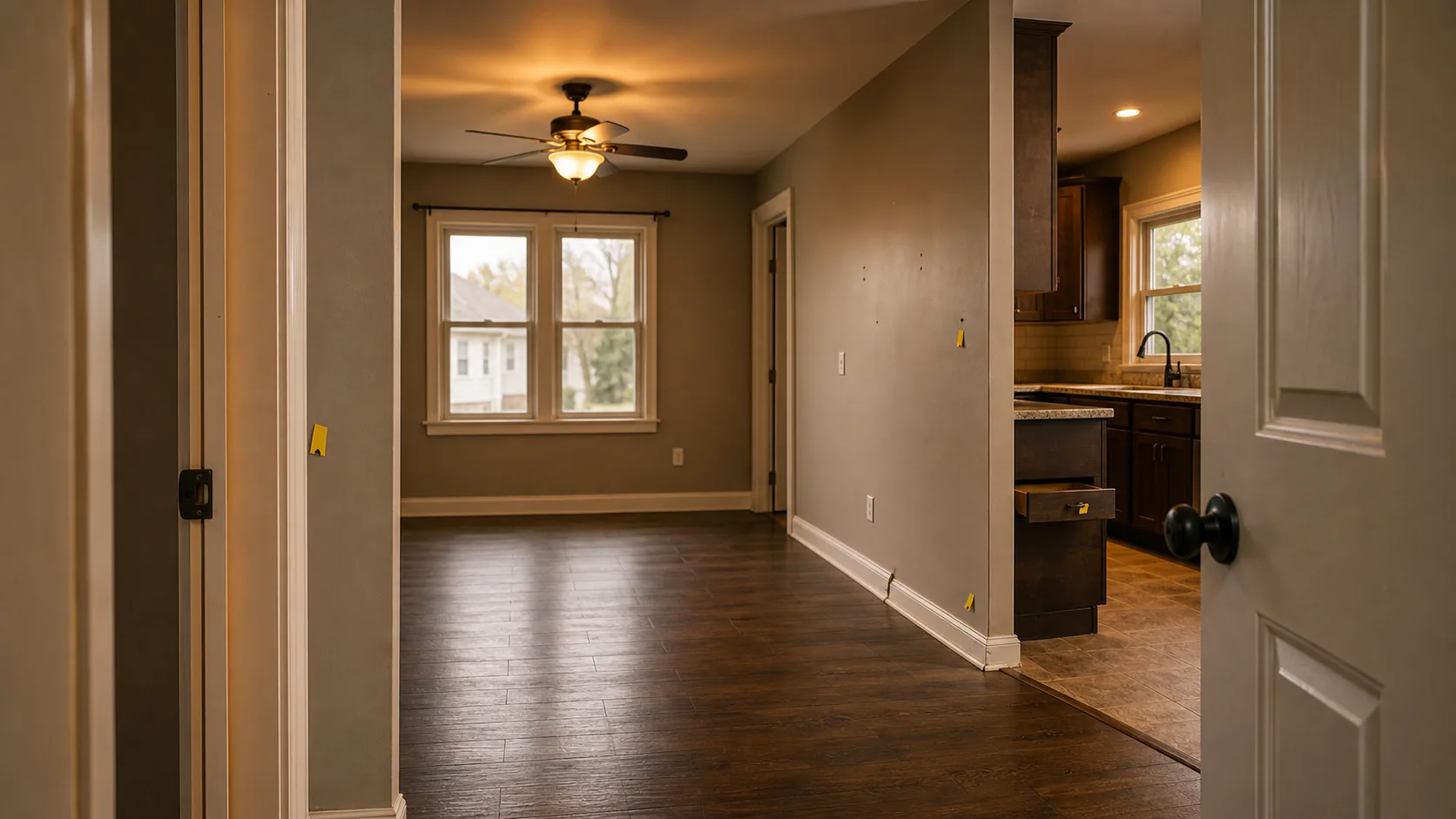 Rental Property Turnover RepairsNeed rental property turnover repairs in Freeport, IL? HammerNest reviews photos, scope, materials, and timing for practical handyman help nearby.View Service ->


 Not sure if we cover your area?


