
Fence Repair
HammerNest provides fence repair help in Freeport, IL for sagging gates, loose pickets, damaged panels, separated rails, latch problems, and small fence sections that need a practical repair review.
Fast response. Quality work. Fair pricing.
Property maintenance
Fence repair for common residential problems in Freeport, IL
HammerNest reviews common fence repair issues such as sagging gates, loose pickets, damaged panels, separated rails, failed latches, and small sections pulling away from posts.
A fence issue should be reviewed as a complete section, not just one loose board or one hard-to-close gate. The material, damaged component, post condition, ground movement, and surrounding access all affect what should be checked next.
Sagging gates and latch problems
Gates that drag, swing unevenly, or no longer meet the latch should be reviewed at the hinges, latch, frame, and supporting posts.
Loose pickets
Loose, split, warped, or missing pickets may involve failed fasteners or damage to the rail behind the visible board.
Damaged panels
Panels that lean, separate, or pull away from posts can point to connection issues, material damage, or post movement.
Separated rails
Rails that have shifted or pulled loose should be checked with the nearby pickets, brackets, fasteners, and post connection.
Complete fence lists
If several fence sections, gates, or hardware pieces are affected, send the full repair list in one request.
Send the complete fence repair list when several sections, gates, or hardware pieces are involved so the request can be reviewed as one property maintenance scope.
Include wide photos, close-up damage, gate hardware views, and what happens when the fence or gate is used.
Project intake checklist
What to send with your fence repair request
A few clear photos and basic measurements help show the damaged section, fence material, access conditions, and whether the problem is limited to one component or affects a larger area.
Full fence section
Take one wide photo showing the complete damaged area and the surrounding yard, posts, gates, landscaping, pavement, sheds, or walls.
Damage close-ups
Add close photos of loose pickets, split rails, leaning posts, separated panels, hinges, latches, brackets, fasteners, or damaged mounting points.
Both sides when accessible
Photograph the fence from both sides when you can do so safely and without entering another property.
Measurements and quantity
Include approximate section length, number of affected panels or pickets, gate width, and whether replacement material is already available.
What happens during use
Explain whether the gate drags, the latch misses, the panel moves in wind, the post shifts, or the damage appeared after weather or impact.
Phone photos do not need to be polished. One wide view, useful close-ups, and a photo showing scale or access usually explain more than one tight crop.
How it works
How the fence repair request works.
A simple repair flow from fence details to follow-up.
- Send repair detailsShare photos, location, urgency, and the best way to reach you.
- Upload photos if helpfulWide and close-up photos make the first review clearer.
- Choose call or text follow-upTell us how you prefer to handle the next step.
- Get the next stepIf the job fits, timing, materials, and the repair plan are confirmed.


Post and ground check
Fence stability starts with the posts and the ground around them
A leaning panel, dragging gate, or rail that keeps pulling loose may begin with a post that has shifted, softened, or lost support.
Ground conditions around Freeport and the surrounding northern Illinois and southern Wisconsin region can also affect fence stability over time.
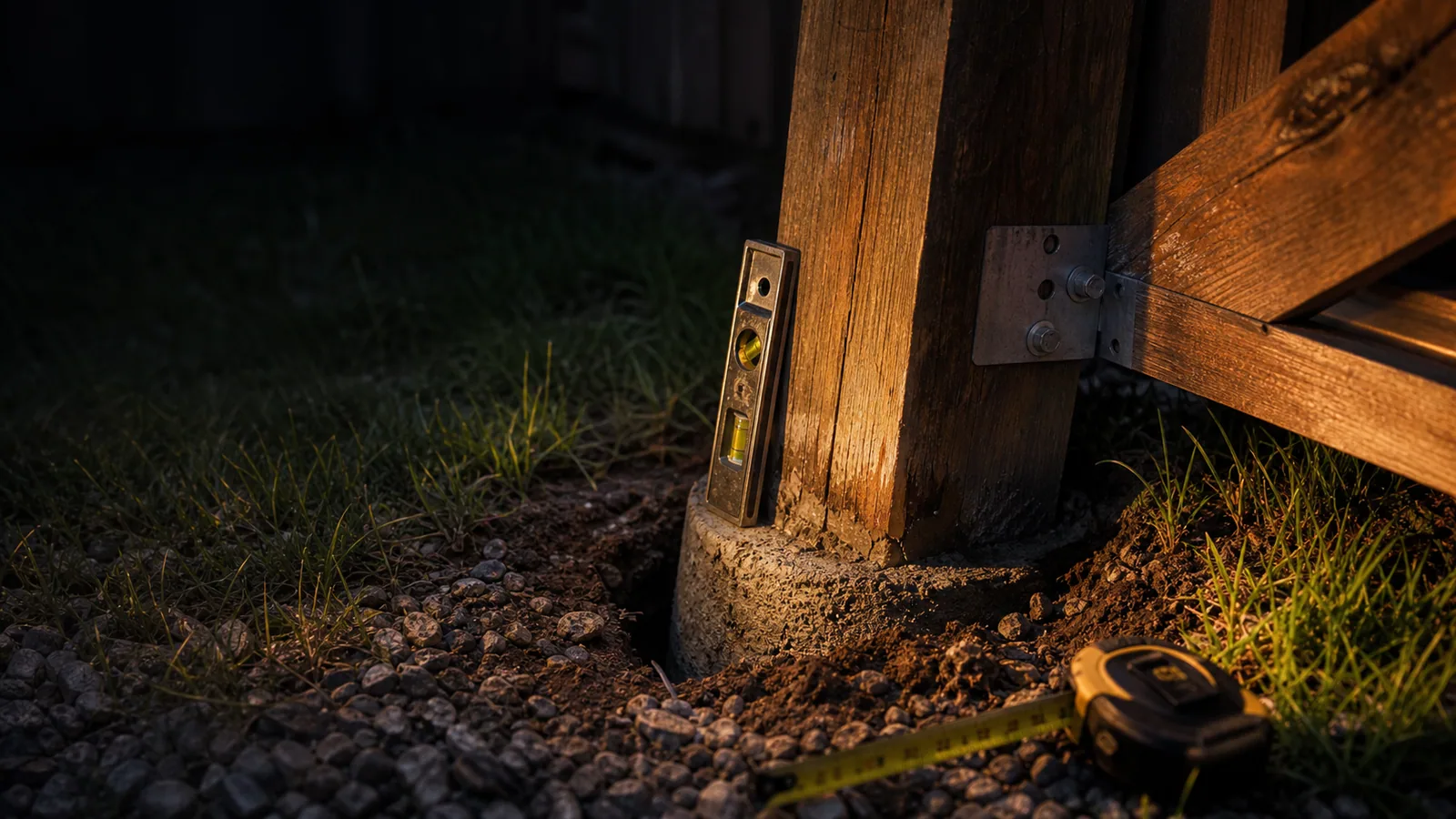
Post
Check the post near ground level for leaning, movement, splitting, softness, or moisture-related deterioration.
Footing
A post may move when surrounding support has loosened, settled, cracked, or washed out around the base.
Soil and drainage
Saturated soil, erosion, roots, and freeze-thaw movement can affect whether a post or panel stays aligned.
Gate load
Repeated gate use can transfer stress into hinges, latch points, post fasteners, and the post base.
Access
Landscaping, sheds, retaining edges, pavement, or tight side yards can affect how a repair area is reached.
If the post, footing, or surrounding ground is moving, repairing the visible fence component may not be enough for the repair to hold.
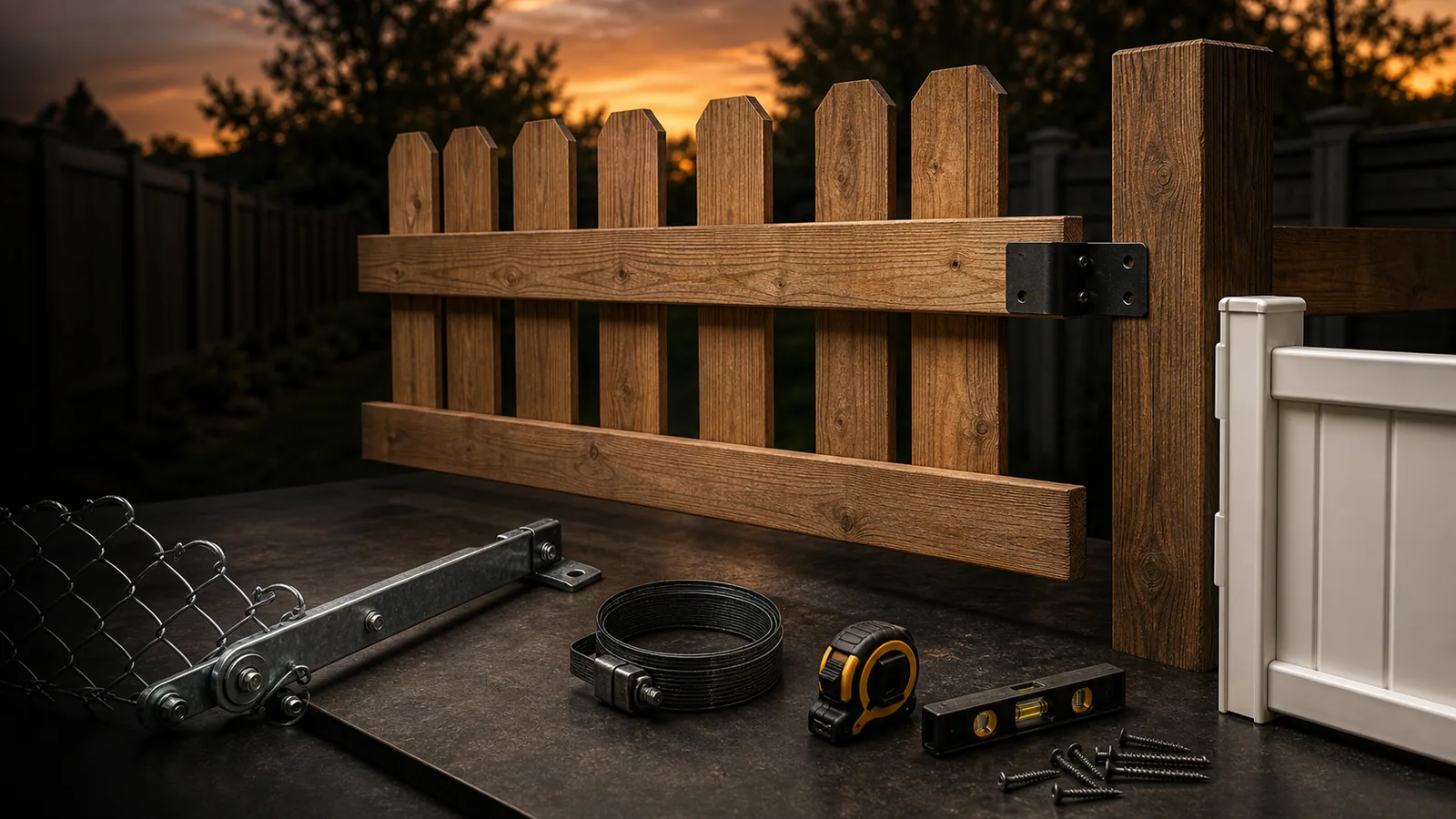
Fence material check
Pickets, panels, and rails should be checked as one fence section
A loose picket or separated panel may look like an isolated problem, but the surrounding rails, brackets, posts, and fasteners often determine whether the repair will hold.
Wood, vinyl, chain-link, composite, and metal fencing use different connections and replacement parts, so photos help identify the repair path.
Pickets
Loose, split, missing, or warped pickets may involve failed fasteners or damage to the rail behind them.
Panels
A panel pulling away, leaning, or opening at a joint should be checked with its rails and nearby posts.
Rails
Rails carry much of the section load, so rot, splits, loose brackets, or failed connections can affect several pickets at once.
Fasteners and brackets
Screws, nails, plates, hinges, and brackets need to match the material and have solid attachment points.
Material condition
Wood, vinyl, chain-link, composite, and metal fence systems use different parts and repair approaches.
Matching existing materials can depend on age, weathering, profile, size, and availability. A practical repair may not always blend perfectly with older fence sections.
Gate function check
Gate problems usually come from alignment, support, or hardware
A gate that sags, drags, binds, swings open, or misses the latch may have more than one issue.
The hinges, frame, posts, hardware, and ground clearance should be reviewed together before the problem is treated as a simple latch adjustment.
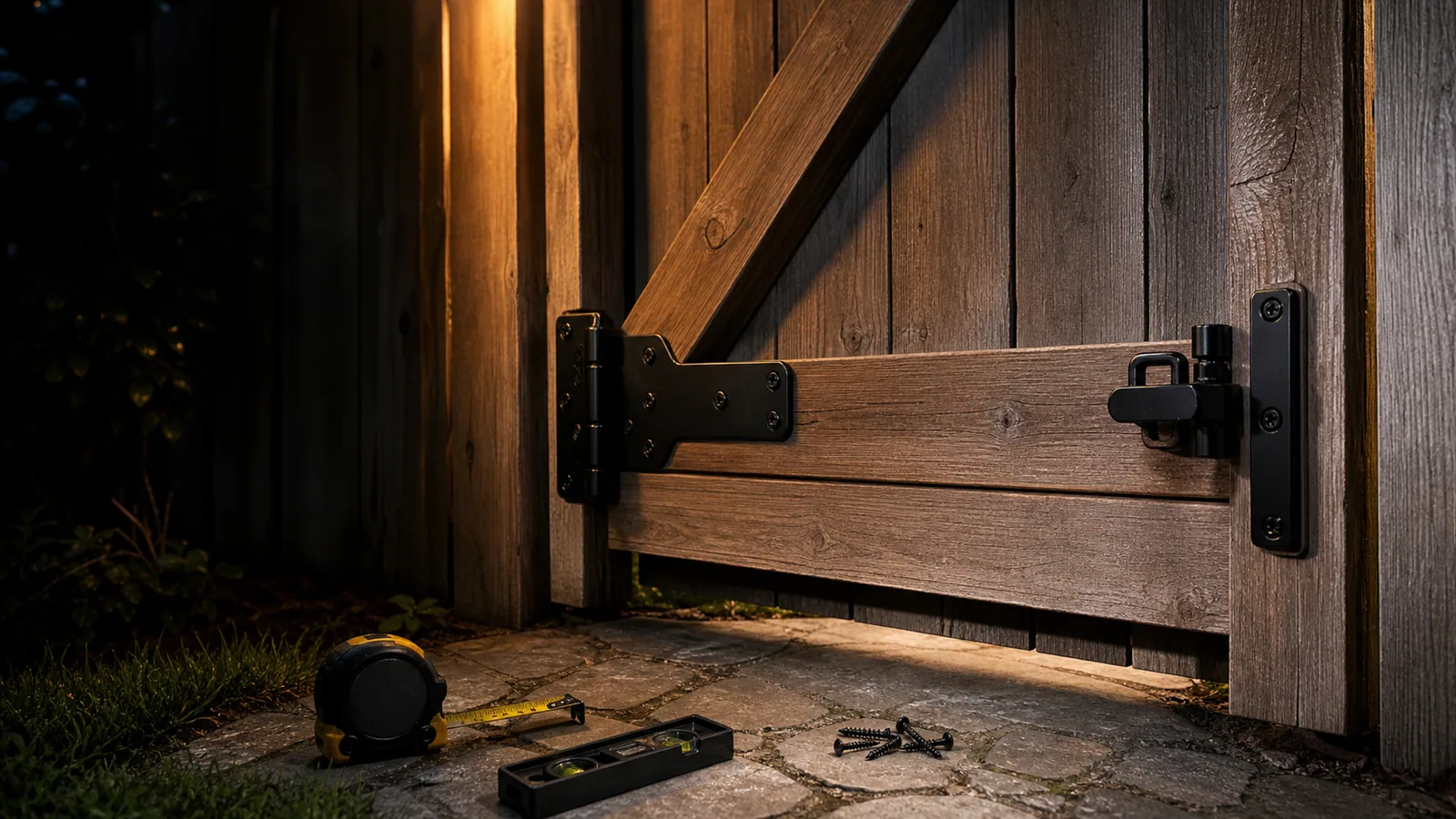
Hinges
Loose hinges, worn hardware, and stripped fastener points can allow the gate to drop, twist, or pull away from the post.
Latch alignment
A latch that no longer meets may be reacting to movement in the gate, post, hinge position, or surrounding fence section.
Gate drag or sag
Dragging or sagging can come from hinge wear, frame movement, gate weight, soil movement, or post shift.
Post movement
A gate can only align as well as the posts supporting it, so leaning or soft posts should be reviewed with the gate.
Hardware and clearance
Stops, catches, brackets, screws, and bottom clearance all affect how the gate travels and closes.
A gate issue may point back to posts, soil movement, hardware wear, or broader fence movement instead of only the latch.
Hinge, latch, post, and bottom-clearance views make the request easier to review.
Estimate factors
What affects a fence repair estimate
Fence repair scope depends on more than the most visible problem. The damaged components, material, post condition, hardware, access, and surrounding deterioration all affect what the repair may require.
Scope
The number and size of affected pickets, panels, rails, posts, gates, and hardware components affects the repair review.
Material
Wood, vinyl, chain-link, composite, and metal fences use different boards, brackets, connectors, and panel parts.
Posts
A loose picket is different from a panel supported by a leaning or deteriorated post.
Hardware
Hinges, latches, brackets, catches, fasteners, and connector plates may need compatible replacements.
Access
Landscaping, slopes, pavement, sheds, tight side yards, and neighboring property lines can affect access.
Existing conditions
Wider deterioration, weather damage, old repairs, ground movement, or rot can make a small repair more involved.
Before sending the request, gather wide photos, close-up damage, basic measurements, and whether the goal is functional repair, appearance improvement, or both.
Clear details help HammerNest review the practical next step without guessing from one close crop.
Repair boundaries
When fence repair may need a different plan
Some fence problems are too broad for a localized repair. Widespread deterioration, repeated post failure, major ground movement, or damage across a long fence run may point toward partial replacement or broader reconstruction.
Other conditions should be clarified before work begins, including property boundaries, buried utilities, drainage issues, retaining structures, and specialized fence systems.
May need a different specialist
Widespread deterioration
Repeated rot, extensive storm damage, failing posts, or damage across most of a fence line may make small isolated repairs impractical.
Large replacement or layout changes
Long replacement runs, new fence layouts, major grading work, or privacy-fence redesigns may need a fencing contractor.
Property line concerns
Boundary disputes, easement questions, shared-fence issues, or unclear ownership should be clarified before repair work.
Buried utilities
Any work involving digging or unknown underground utilities should be addressed before post or ground work proceeds.
Specialized fence systems
Automated gates, commercial security fencing, pool-code fencing, or specialty systems may require a specialist.
Drainage or retaining issues
Retaining walls, drainage failures, erosion, or major soil movement may need a different trade before the fence is repaired.
If nearby deck, railing, weatherproofing, or exterior hardware issues are part of the same property list, mention them once and let the related-service cards below guide the next page.
Service hub
Related exterior repair help.
These pages may fit nearby exterior repairs or the same property maintenance list.
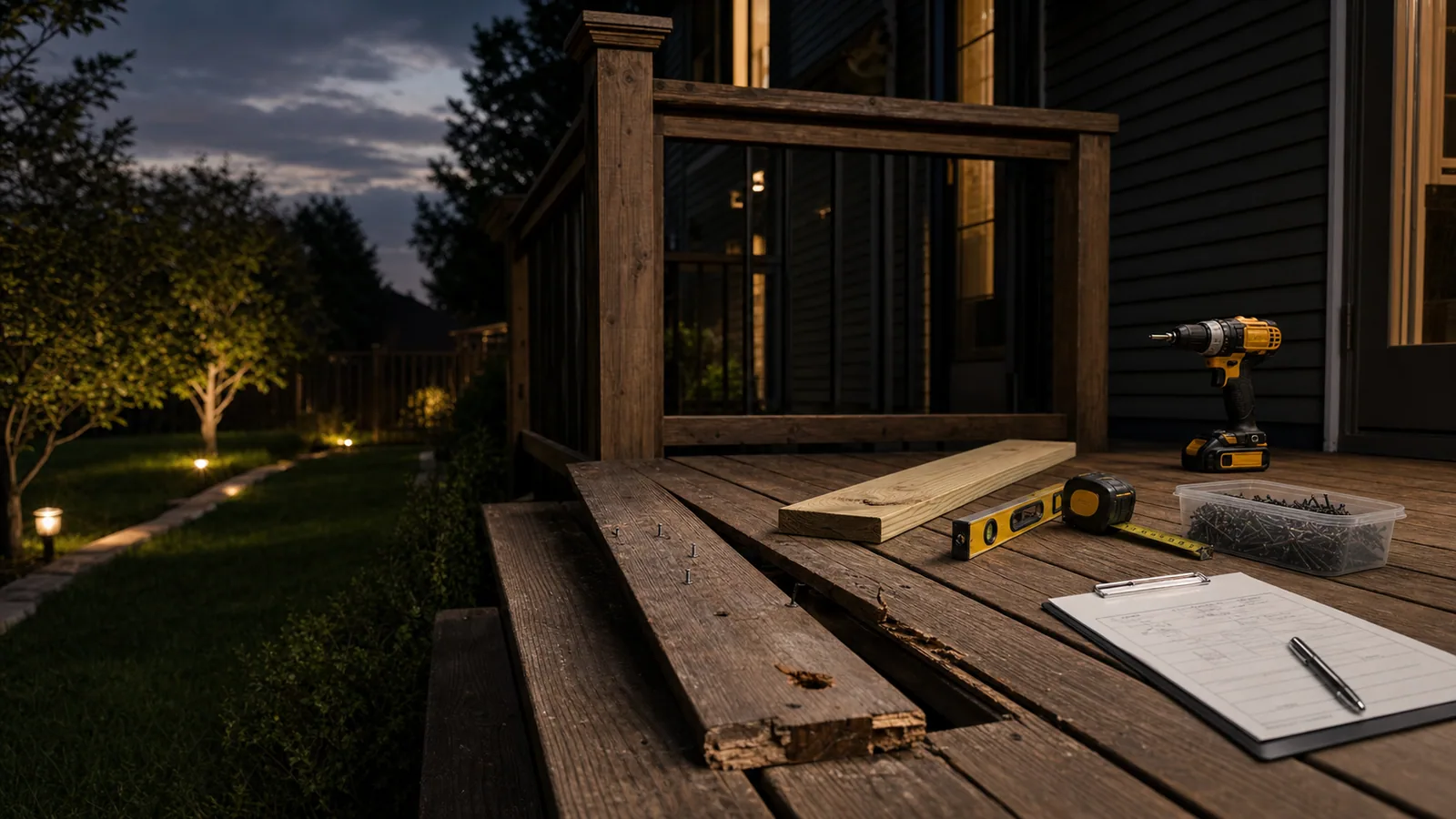 Deck RepairNeed deck repair in Freeport, IL? HammerNest reviews photos, scope, materials, and timing for practical handyman help nearby.View Service ->
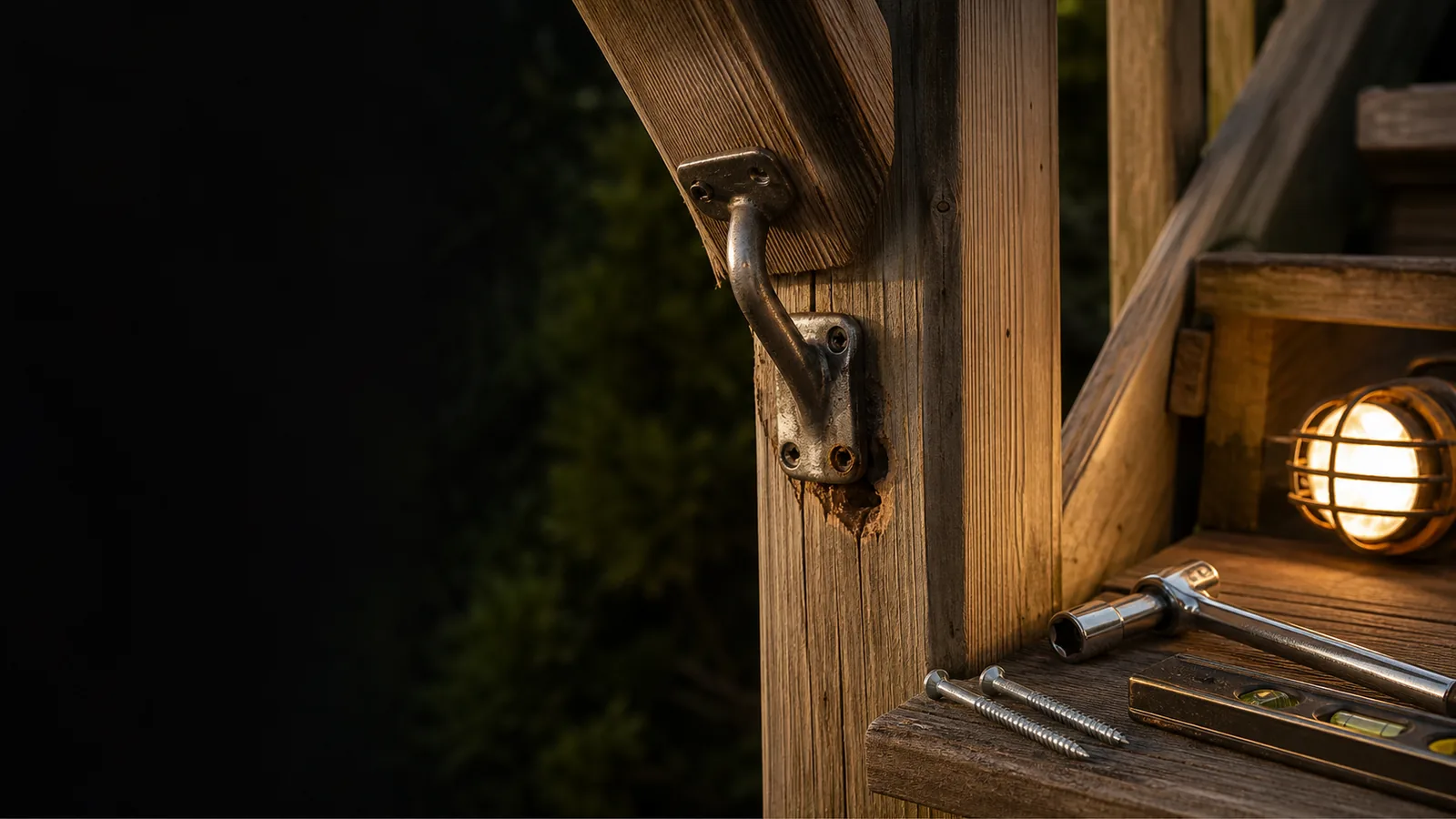 Fix Loose RailingsLoose railing or wobbly stair detail near Freeport? HammerNest can review photos, fastening points, materials, and handyman-scope options.View Service ->
 Weatherproofing and CaulkingNeed weatherproofing and caulking in Freeport, IL? HammerNest reviews photos, scope, materials, and timing for practical handyman help nearby.View Service ->
 Property Maintenance in Freeport, ILOrganize rental turnover repairs, deck fixes, fences, minor plumbing, light electrical tasks, and property punch lists near Freeport.View Service ->


 Not sure if we cover your area?


